
Short Answer
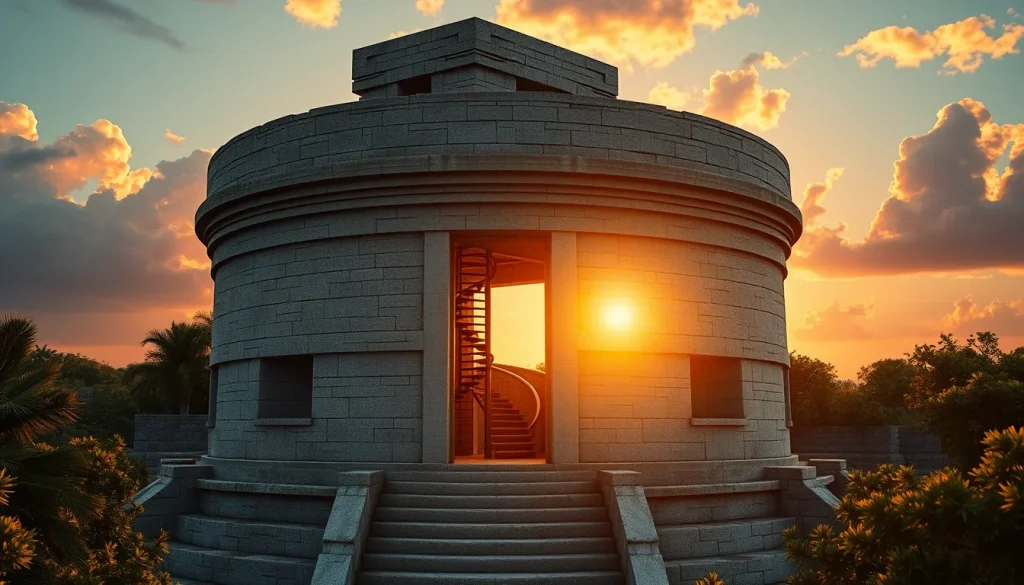
El Caracol, often referred to as the Observatory, stands as one of the most enigmatic and architecturally distinct structures within the ancient Maya city of Chichen Itza. Located in the southern precinct of the site, this round tower diverges significantly from the typical rectangular pyramid structures common in Maya civic architecture. Its design reflects a sophisticated understanding of celestial mechanics, specifically tailored to track the movements of Venus and the Sun. The structure serves as a primary example of archaeoastronomy, where building orientation aligns with significant astronomical events, grounding spiritual cosmology in physical space.
Main Explanation
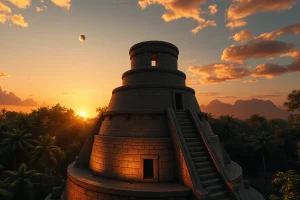
The name El Caracol, meaning “snail” in Spanish, derives from the spiral staircase coiled inside the upper drum of the tower, a detail that captured the attention of observers as early as the sixteenth century. Unlike surrounding buildings aligned to the cardinal directions or the local grid, El Caracol is set on a double rectangular platform whose corners respect a different geometry altogether. This unique orientation suggests the building was designed not merely for ceremonial purposes but for specific observational functions. The tower rises in two cylindrical tiers above the base platform, allowing observers to view the sky above the vegetation on the Yucatán Peninsula without obstruction. This elevation was crucial in the flattened landscape of the region, which lacked natural markers for astronomical tracking.
Historical dating places the construction of El Caracol around AD 906, during the Post Classic period of Mesoamerican chronology. This dating is supported by a stele found on the Upper Platform. The structure represents a convergence of Puuc-influenced architecture and the innovations of the Terminal Classic Maya. While the building is a monument related to Quetzalcoatl, its primary functional inference is that of an astronomical instrument. The Maya astronomers who utilized this structure relied on naked-eye observations to track celestial bodies, documenting cycles that were critical for their calendar systems and agricultural planning. The integration of architecture and astronomy at El Caracol demonstrates the high level of scientific achievement attained by the Maya civilization.
Evidence & Sources
Archaeological and archaeoastronomical investigations have provided substantial evidence regarding the function of El Caracol. Beginning in the 1920s, Sylvanus Morley and his Carnegie Institution team photographed the ruin, sparking decades of inquiry into the purpose of its skewed platform and angled windows. Modern analysis, including laser scans, has confirmed that the building’s corners are aligned to angles that ignore the local grid, suggesting a specific geometric intent tied to celestial tracking. Research published in Science in 1975 by Aveni and colleagues revealed a number of significant astronomical events coinciding with many of the measured alignments. However, the researchers also noted that not every alignment appears to have an astronomical match which can be recognized, indicating that only some of the sighting possibilities were actually functional.
Key evidence includes the alignment of the grand staircase, which faces 27.5 degrees north of west. This orientation is out of line with other buildings at the site but serves as an almost perfect match for the northern extreme of Venus, representing Venus’s most northerly position in the sky. Additionally, a diagonal formed by the northeast and southwest corners of the building aligns with both the summer solstice sunrise and the winter solstice sunset. Maya astronomers knew from naked-eye observations that Venus appeared on the western horizon and disappeared on the eastern horizon at different times in the year, completing a cycle of about 584 days. They also understood that five of these Venus cycles equaled eight solar years. This knowledge is anchored in the architecture of El Caracol and correlates with data found in the Dresden Codex, providing textual support for the architectural evidence.
Deep Dive Analysis
Location and Context
El Caracol is situated at the northern edge of Chichen Itza’s southern precinct, known as the Old Chichen sector. This location places it within a zone where Puuc-influenced architecture mingles with the innovations of the Terminal Classic Maya. The positioning was strategic, allowing for unobstructed views of the horizon necessary for precise astronomical sightings. The flat landscape of the Yucatán meant that artificial elevation was required to clear the vegetation canopy, making the tower’s height a functional necessity rather than purely symbolic.
Construction and History
The structure is dated to around AD 906 based on epigraphic evidence from the stele on the Upper Platform. This places it firmly in the Post Classic period. The construction involves a round tower set on a double rectangular platform. The use of a round tower is unique in Maya architecture, distinguishing it from the typical step-pyramids. The internal spiral staircase, which gives the structure its Spanish name, allows access to the upper observation chamber. This design feature was noted by sixteenth-century observers long before the astronomical function was hypothesized by modern archaeologists.
Architecture and Design
The tower rises in two cylindrical tiers above the base platform. The corners of the base platform are aligned not to the cardinal directions, like most Maya civic architecture, but to a set of angles that respect a different geometry. The windows in the upper drum are angled, providing specific sightlines to the horizon. These architectural features were not arbitrary; they were engineered to frame specific celestial events. The combination of the spiral staircase and the viewing windows suggests a design optimized for movement and observation, allowing priests or astronomers to track celestial bodies over time.
Astronomical Interpretation
The primary astronomical interpretation focuses on the planet Venus. The grand staircase alignment of 27.5 degrees north of west matches the northern extreme of Venus. The Maya tracked Venus’s 584-day cycle meticulously, knowing that five cycles equaled eight solar years. Venus would make an appearance at the northerly and southerly extremes, and these extremes were marked by the building’s alignments. Additionally, the diagonal alignment of the platform corners tracks the solstices, linking the structure to the solar year as well. This dual focus on Venus and the Sun highlights the complexity of the Maya calendar system.
Archaeological Evidence
Evidence for these interpretations comes from both physical measurements and textual sources. Laser scans of El Caracol have provided precise data on the building’s orientations. These measurements correlate with the astronomical data recorded in the Dresden Codex, a Maya screen-fold book that contains tables for predicting Venus’s appearances. The convergence of architectural alignment and codical data strengthens the hypothesis that El Caracol was an active observatory. However, investigations reveal that not every alignment has a recognized astronomical match, suggesting some features may have been symbolic or related to unrecognized constellations.
Alternative Interpretations
While the observatory function is widely accepted, there are alternative interpretations. Some researchers suggest that only some of the sighting possibilities discussed were actually functional. It is possible that hitherto unrecognized constellations were sighted in the windows, or perhaps fainter stars, the heliacal rising and setting times of which could have served to mark important dates in the calendar. The search for significant astronomical events has typically included only those of obvious functional importance, such as the sun, moon, and planetary extremes. Therefore, some alignments may correspond to celestial bodies or events not yet identified by modern archaeoastronomers.
Scholar Consensus
The scholarly consensus infers that the building, apart from being a monument related to Quetzalcoatl, was designed for astronomical observation. The emphasis on celestial bodies documented in the literature as having been of importance supports this view. The structure provided a way for the Maya people to observe changes in the sky due to the flattened landscape of the Yucatán. While no grand cosmic scheme is proposed for the astronomical design, the functional importance of the alignments is clear. The building stands as a testament to the integration of science, religion, and architecture in Maya culture.
Visitor Misconception
A common misconception among visitors is that El Caracol functioned like a modern observatory with telescopes. In reality, Maya astronomers relied on naked-eye observations. The structure acted as a fixed reference point rather than a housing for optical instruments. The windows served as sighting tubes to mark the horizon points where celestial bodies rose or set. Understanding this distinction is crucial for appreciating the sophistication of Maya astronomy, which achieved high precision without the aid of lenses or mechanical devices. The structure’s purpose was to anchor the planet’s cycle to architecture and the calendar, facilitating ritual and agricultural timing.
FAQ
What was the primary function of El Caracol?
El Caracol served as an astronomical observatory used to track the movements of Venus and the Sun, aligning with specific celestial extremes.
Why is it called El Caracol?
The name means 'snail' in Spanish, referring to the spiral staircase coiled inside the upper drum of the tower.
Did the Maya use telescopes at El Caracol?
No, Maya astronomers relied on naked-eye observations. The structure provided fixed sightlines to mark horizon positions of celestial bodies.
Leave a Reply