
Short Answer
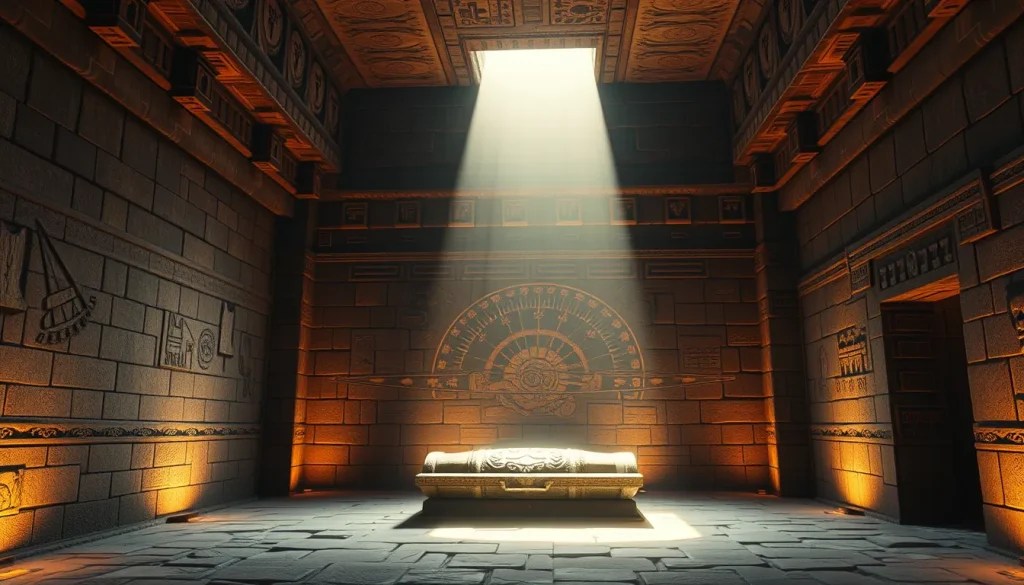
In the ancient Maya world, death was not an end but a transformation within a vast cosmic order. High-ranking members of society were interred in elaborate tomb chambers that served as more than mere repositories for the deceased; they were instruments of state and cosmological markers. The intersection of archaeology and astronomy reveals that Maya tombs were frequently aligned with celestial phenomena, embedding the ruler’s journey into the architecture of the city itself. These structures functioned as metaphors for sacred mountains, replicating natural landscapes within the culturally constructed environments of urban centers. Through the analysis of sites such as Río Azul and Palenque, scholars have identified a marked difference between commoner burials and the elaborate masonry chambers of the elite, which often contained valuable information regarding identity, religion, and history.
Main Explanation
The construction of Maya funerary monuments was deeply rooted in cosmological thought. Pyramidal buildings were often designed as metaphors for mountains, serving as parts of sacred natural landscapes that were replicated in the cities. This merging of religion and politics in the constructed landscape meant that the tomb of a ruler was also a statement of power and cosmic alignment. Social hierarchy is quite apparent in ancient Maya burial contexts, with a clear distinction between commoner burials in households and the elaborate masonry chambers found in pyramidal temples. These elite tombs housed the remains of rulers like Janaab’ Pakal and presented iconography signifying the convergence of parent, child, and ancestor.
The Temple of the Inscriptions at Palenque, erected in the seventh century, exemplifies a paradox: commemorating a death while celebrating the future. In Maya cosmology, death and life are opposites that complement each other, viewed as halves of a sphere. In the prenatal world, life and death are merged; in the mortal world, they are opposed; and in the world beyond, they are reunited again. The funerary building for ruler K’inich Janab Pakal presents an iconography that supports this view, suggesting that the tomb was designed to facilitate the ruler’s transition into the celestial realm. The architecture itself acted as a conduit, aligning the physical body with the movements of the stars and planets, ensuring the continuity of the dynasty and the cosmic order.
Evidence & Sources
Archaeological evidence for these celestial alignments comes from both traditional excavation and modern digital heritage technologies. At Río Azul, Guatemala, Early Classic Maya tomb murals provide insight into royal death and cosmic landscapes. These murals and the associated tomb chambers demonstrate how ancient Maya religion and politics were merged in the constructed landscape. The presence of elaborate masonry chambers in pyramidal temples, as opposed to simple cists for commoners, underscores the social hierarchy inherent in these burial practices. Furthermore, these buildings served as “instruments of state,” containing data regarding identity and history that reinforced the ruler’s divine connection.

Recent advancements in digital archaeology have further illuminated these structures. The Mausoleum Architectural Project utilized 3D data-driven architectural analysis to reinterpret Palenque’s Temple of the Inscriptions. For decades, scholars speculated on its construction sequence and the potential existence of hidden chambers. Through 3D surveying and cultural heritage conservation techniques, researchers have been able to analyze the temple’s structure without invasive excavation. This project highlights how understanding ancient urbanism and site planning can reveal unintended consequences of the Classic Maya city as a model. Additionally, studies on the stars of the Palenque sarcophagus suggest that the iconography within the tomb directly references celestial bodies, reinforcing the astronomical function of the burial site.
Deep Dive Analysis
Location
The primary case study for celestial alignments in Maya tombs is the Temple of the Inscriptions, located in Palenque, Chiapas, Mexico. This site served as the funerary monument for the ruler Janaab’ Pakal around C.E. 683. The temple is situated within a larger complex that reflects the sacred geography of the region, positioning the ruler’s rest within a specific cosmological framework.
Construction and History
Erected in the seventh century, the Temple of the Inscriptions is an outstanding example of Classic Maya architecture. It was built specifically as a funerary building, distinguishing it from temples dedicated solely to active worship. The construction sequence has been a subject of scholarly speculation, with recent 3D data-driven analysis providing new insights into how the structure was assembled to house the tomb securely while maintaining architectural integrity.
Architecture
The temple functions as a pyramidal building, which in cosmological thought served as a metaphor for a mountain. This design replicated sacred natural landscapes within the culturally constructed landscape of the city. The interior contains elaborate masonry chambers, contrasting sharply with the sub-floor cists used for commoner burials. The architecture was designed to be an “instrument of state,” merging religion and politics to reinforce the ruler’s identity and history.
Astronomical Interpretation
The iconography within the temple signifies the convergence of parent, child, and ancestor, reflecting a cosmic cycle where death and life are reunited. The sarcophagus lid and interior murals often reference celestial bodies, suggesting that the tomb was aligned with specific astronomical events. This alignment ensured that the ruler’s death was not an end but a transition into the celestial sphere, complementing the living world.
Archaeological Evidence
Evidence includes the physical structure of the tomb chambers, the murals at sites like Río Azul, and the iconography on the Palenque sarcophagus. The Mausoleum Architectural Project provided 3D data that allowed for non-invasive analysis of the construction sequence. This digital heritage approach confirmed the complexity of the design and supported theories regarding hidden chambers and structural intentions related to burial security and cosmic alignment.
Alternative Interpretations
While some buildings served as tombs, others functioned as cenotaphs, or empty monuments dedicated to the deceased. Scholars debate whether all pyramidal temples housed actual remains or if some were purely symbolic. However, the Temple of the Inscriptions is confirmed to house the elaborate burial of ruler Janaab’ Pakal, making it a definitive example of a funerary monument rather than a cenotaph.
Scholar Consensus
There is a clear consensus that social hierarchy is apparent in ancient Maya burial contexts. Elite burials in masonry chambers within pyramidal temples are distinct from commoner interments. Scholars agree that these buildings contained valuable information regarding identity, religion, and history. The integration of 3D data-driven analysis has strengthened the understanding of these structures as complex architectural projects designed with specific funerary and cosmological goals.
Visitor Misconception
A common misconception among visitors and popular culture is that the alignments suggest extraterrestrial involvement or mystical powers beyond human capability. In reality, the alignments are the result of sophisticated astronomical observation and mathematical calculation by Maya architects. The “paradox” of commemorating death while celebrating the future is a philosophical and religious concept, not a supernatural anomaly. The structures are clear examples of how ancient Maya religion and politics were merged in the constructed landscape through human ingenuity.
FAQ
Were all Maya pyramids used as tombs?
No, while many elite tombs were housed in pyramidal temples, some buildings served as cenotaphs or were dedicated solely to worship without containing remains.
How do we know about the astronomical alignments today?
Knowledge comes from archaeological excavation, analysis of iconography such as the Palenque sarcophagus, and modern 3D data-driven architectural analysis.
What distinguishes an elite Maya tomb from a commoner burial?
Elite tombs featured elaborate masonry chambers within pyramidal temples, whereas commoners were buried in households, patios, or simple sub-floor cists.

Leave a Reply