
Short Answer
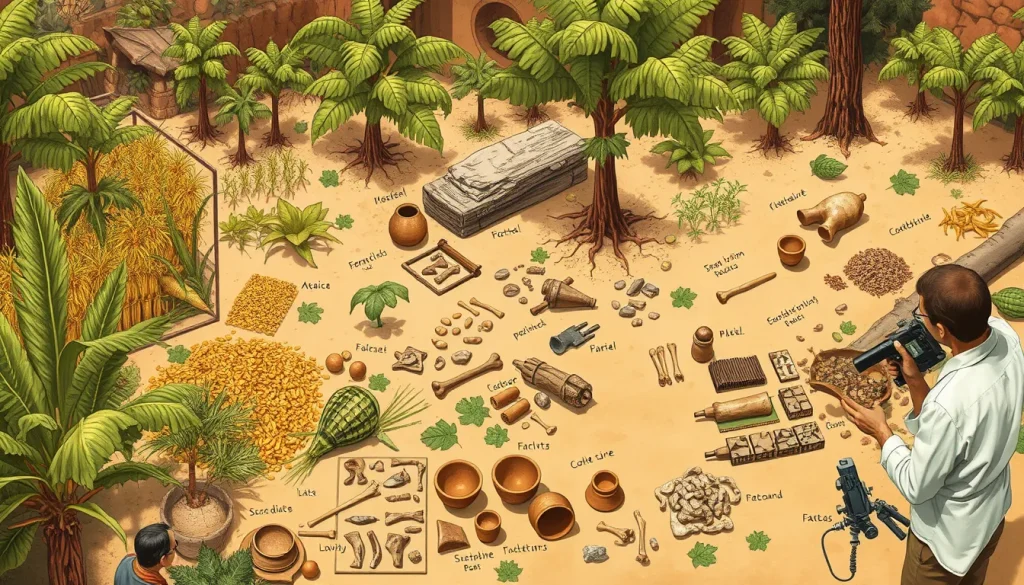
The dietary habits of the ancient Maya civilization have long been a subject of intense scholarly debate, often simplified in popular culture to a reliance solely on maize agriculture. However, contemporary archaeological science has revolutionized our understanding of Maya foodways, revealing a complex biocultural system adapted to diverse environments. Recent studies utilizing stable isotope analysis and paleoethnobotanical residues indicate that while maize was ideologically and physically significant, it was part of a heterogeneous agricultural strategy that included root crops, tree crops, and wild resources. This evidence challenges inherited models of homogeneity, suggesting that dietary variability played a crucial role in social differentiation, political economy, and resilience during periods of environmental stress.
Main Explanation
The traditional narrative of the Maya diet centers on the “milpa” system, a swidden agricultural method focusing on the triad of maize, beans, and squash. While maize was indeed responsible for both the ideological and physical survival of the Maya, recent research underscores significant variability in the degree to which it was consumed across different regions and time periods. The ancient Maya Lowlands supported a variety of agricultural regimes that were far more adaptable than previously assumed. Instead of a single rigid template, evidence points to a diversity of strategies including agroforestry, homegardening, horticulture, and wild resource management.
Dietary consumption was not uniform across the population. Social variables such as status and gender influenced access to specific food types. Elite classes often had access to a wider variety of protein sources and imported goods, whereas commoner diets were more localized. Furthermore, the relationship between diet and significant temporal developments, such as agricultural intensification, the collapse of Classic Maya society, and the Spanish conquest, provides critical insights into how food security influenced societal stability. The reliance on C4 plants like maize varied, with some communities showing higher dependence on C3 plants, indicative of root crops and tree crops, challenging the historical documentation that prioritized maize centrality.
Evidence & Sources
Modern understanding of Maya diet relies heavily on direct evidence provided by the stable isotope composition of carbon and nitrogen found in human remains. This method allows archaeologists to reconstruct food consumption patterns over an individual’s lifetime. For instance, research profiling the diets of Classic Maya communities living in Southeastern Petén through stable isotope analysis has provided granular data on regional dietary habits. These studies utilize datasets from archaeological wood charcoal, seeds, phytoliths, and starch grains to build a comprehensive picture of plant management.
Paleoethnobotanical residues offer a complementary line of evidence, revealing the biological properties of plants utilized by pre-Columbian societies. New perspectives on plant management suggest that earlier models underestimated the affordances of the environment. Researchers have found more heterogeneity of strategies across the lowlands than a single rigid template would allow. This scientific approach addresses inherited models of agriculture by finding more reliance on root crops and tree crops than historically documented. The integration of contemporary Indigenous practices with archaeological data further validates these findings, showing continuity in resource management strategies that prioritize biodiversity over monoculture.
Deep Dive Analysis
Definition: Maya Dietary Reconstruction
Maya dietary reconstruction is defined as the scientific process of inferring past food consumption patterns through biogeochemical and botanical evidence. It moves beyond ethnohistoric accounts to provide empirical data on what was actually consumed versus what was ritually emphasized. This definition encompasses both the biological intake of nutrients and the cultural frameworks that dictated food production and distribution.
How it Works
The reconstruction process primarily utilizes stable isotope analysis. Carbon isotopes distinguish between C3 plants (most trees, beans, squash) and C4 plants (maize, millet). Nitrogen isotopes indicate trophic levels, helping identify meat consumption. Additionally, paleoethnobotanical analysis examines microscopic plant remains. Phytoliths and starch grains preserved on stone tools or in dental calculus provide direct evidence of specific plant species processed or consumed. These methods work in tandem to cross-verify data, ensuring that isotopic signals are correctly interpreted against botanical presence.
Key Components
The key components of the Maya diet identified through these methods include maize, which holds ideological primacy, but also a significant proportion of root crops and tree crops. Protein sources varied from white-tailed deer and turkey to freshwater fish and mollusks, depending on proximity to water bodies. Agricultural strategies were not limited to the milpa system; they included intensive homegardening and agroforestry. This diversification was crucial for mitigating risk in the variable tropical environment of the Lowlands.
Example
A pertinent example is found in the profiling of Classic Maya communities in Southeastern Petén. Stable isotope analysis here revealed distinct dietary signatures that correlated with social status and location. Another example is the broader analysis of the Ancient Maya Lowlands, where paleoethnobotanical residues showed a higher reliance on non-maize crops than previously thought. These cases illustrate the heterogeneity of agricultural strategies across the lowlands.
Historical Evidence
Historical evidence links diet to major societal shifts. Relationships between diet and significant temporal developments such as the collapse of Classic Maya society are examined through isotopic shifts. Changes in agricultural intensification are visible in the isotopic record, reflecting how populations adapted to population pressure or environmental degradation. The Spanish conquest also marks a dietary transition point, visible in later isotopic samples where European domesticates begin to appear.
Common Misconceptions
A primary misconception is the centrality of maize in agriculture as the sole food base. Historical documentation often obscured the reliance on root crops and tree crops. Another misconception is the homogeneity of agricultural strategies; earlier models assumed a uniform approach across the Maya region. Current evidence finds more affordances in the environment than anticipated by earlier models and more heterogeneity of strategies. Finally, the focus on the milpa system as the exclusive food base ignores the significant contribution of agroforestry, homegardening, horticulture, and wild resource management to daily subsistence.
FAQ
Did the Maya only eat maize?
No. While maize was ideologically central, archaeological evidence shows significant reliance on root crops, tree crops, beans, squash, and wild resources.
How do scientists know what the Maya ate?
Scientists use stable isotope analysis of human bones and teeth, along with paleoethnobotanical residues like phytoliths and starch grains found on tools.
Did all Maya communities eat the same diet?
No. There was significant variability in diet across time, space, and social variables, with different agricultural strategies employed across the Lowlands.
How did diet relate to the Maya collapse?
Research examines relationships between diet and temporal developments such as agricultural intensification and the collapse of Classic Maya society.




Leave a Reply