
Short Answer
Virtual repatriation has emerged over the past decades as a key innovation in digital humanities and heritage studies, offering a mechanism to reconnect displaced cultural materials with their communities of origin. In the context of Maya cultural heritage, this practice involves the creation and transfer of digital surrogates—such as 3D models, high-resolution imagery, or archival data—to descendant communities when physical return is impossible. While digital replicas may offer a symbolic return of contested cultural property, significant ethical, legal, and social concerns persist regarding who holds ownership of digitized cultural property and who determines their access, use, and interpretation. Recent academic discourse in 2025 and 2026 emphasizes that virtual repatriation must move beyond mere access to foster relational engagement and avoid reinforcing existing colonial inequalities.
Main Explanation
The core ethical tension in digital repatriation lies between institutional control and community empowerment. Collecting institutions often retain control over original artifacts while offering digital copies, which can perpetuate institutional authority rather than restoring sovereignty to Indigenous groups. Giulia Picci, a researcher at the IMT School for Advanced Studies Lucca, noted in September 2025 that while digital replicas expand access, they often enable collecting institutions to maintain control over original artifacts, thereby reinforcing existing inequalities. This dynamic raises critical questions about whether virtual surrogates can replace the material and, at times, sacred significance of the physical objects from which they derive.
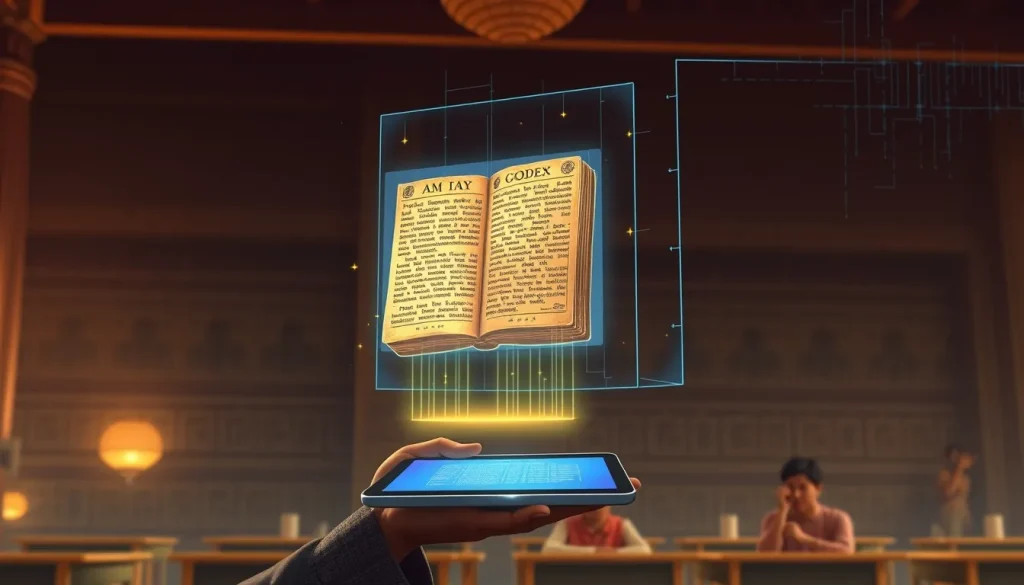
Furthermore, the methodology of repatriation matters. A 2025 master’s thesis from Aalborg University by Paola Saucedo critiques current virtual repatriation practices for prioritizing access over relational engagement. Saucedo’s research investigates how digital artifacts, specifically the Maya codices, can be meaningfully reconnected with living communities. The study argues that ethical frameworks must be grounded in participatory design, storytelling, and gamification rather than simple digitization. Through collaboration with Maya educators and digital activists, this research developed a speculative prototype reimagining the Madrid Codex as a tool for cultural continuity and situated meaning-making. This approach suggests that ethical digital heritage requires active co-design rather than passive consumption of data.
Evidence & Sources
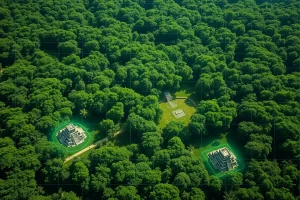
Archaeological and digital evidence supports the need for nuanced ethical frameworks in Maya heritage management. The introduction of Light Detection and Ranging (LiDAR) technology to Maya archaeology has provided control of spatial parameters in a way that had not been previously possible, revealing vast urban networks beneath the jungle canopy. However, a position paper by Adrian S. Z. Chase, Diane Chase, and Arlen Chase highlights that the introduction of this technology has also involved researchers in a series of broader ethical debates. The digital LiDAR files are large and require appropriate long-term storage and management considerations, leading to differences of opinion worldwide on how to treat LiDAR data as scientific and open yet national and protected datasets.
Some countries do not want fully public access to these files because of the potential danger posed to the looting of their heritage and security or military concerns. This evidence underscores the risk that open data initiatives, while scientifically beneficial, may inadvertently facilitate heritage destruction if not governed by strict ethical protocols. Additionally, the work on the Madrid Codex provides textual and archival evidence that digitization alone is insufficient. Saucedo’s techno-anthropological mixed-methods design combines document and archival analysis of the codices with participatory co-design. This evidence demonstrates that meaningful reconnection requires ethnographic engagement alongside digital activation, validating the shift from access-centric to relation-centric models.
Deep Dive Analysis
Technology Description
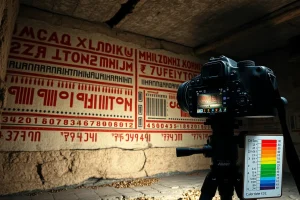
Digital repatriation relies on a suite of technologies including photogrammetry, 3D laser scanning, and aerial LiDAR. These tools create high-fidelity digital twins of physical heritage sites and artifacts. In the case of the Maya codices, high-resolution multispectral imaging is used to capture text and imagery that may be invisible to the naked eye. For architectural sites, LiDAR penetrates vegetation to map structural remains without invasive excavation.
How It Works
The process begins with data acquisition, where sensors capture geometric and textural information. This data is processed into mesh models or point clouds, which are then textured and optimized for viewing. In ethical repatriation workflows, this processing stage includes metadata tagging that respects community-specific classifications and knowledge systems. The final output is hosted on platforms that allow for varying levels of access control, ensuring that sensitive data is not publicly exposed if deemed risky by stakeholders.
Field Workflow
Fieldwork involves collaboration between archaeologists, technologists, and community representatives. Before scanning begins, agreements are established regarding data ownership. During the 2025 study on the Madrid Codex, the workflow included participatory co-design sessions with Maya educators. This ensures that the digital capture aligns with pedagogical goals and cultural protocols rather than solely scientific documentation. For LiDAR projects, workflows now often include risk assessments regarding looting potential before data publication.
Output/Data
Outputs range from interactive 3D viewers to game-inspired prototypes. Saucedo’s research developed an interactive storytelling and game-inspired prototype that reimagines the Madrid Codex as a relational, pedagogical tool. LiDAR outputs typically consist of digital elevation models (DEMs) and classified point clouds. The format of the data is crucial; open formats promote longevity, but encrypted or restricted formats may be necessary for security.
Example
A primary example is the speculative prototype for the Madrid Codex developed in collaboration with Maya educators. This prototype moves beyond a static PDF representation to an interactive environment where users engage with the content through storytelling mechanisms. Another example is the management of LiDAR data in the Maya lowlands, where researchers must balance open science mandates with national security concerns regarding site locations.
Strengths
Digital repatriation expands access to cultural property for wider audiences and allows for the preservation of fragile materials without physical handling. It enables communities to access materials held in foreign institutions without the cost and logistics of travel. Furthermore, digital tools allow for the layering of contemporary Indigenous knowledge over archaeological data, creating a richer, multi-vocal historical record.
Limitations
Virtual surrogates cannot fully replace the material and, at times, sacred significance of the physical objects. There is also the risk of digital fatigue, where communities are overwhelmed by data without receiving tangible benefits. Additionally, technology is overtaking some of the ethical frameworks, meaning policies often lag behind technical capabilities. Digital files also require long-term storage and management considerations, posing sustainability challenges for community archives.
Accuracy
Modern scanning technologies offer millimeter-level accuracy for artifacts and centimeter-level accuracy for large-scale LiDAR surveys. However, accuracy in representation is not just geometric; it is also cultural. A model may be geometrically perfect but culturally inaccurate if it lacks the contextual narrative provided by community elders. Therefore, “accuracy” in digital heritage must encompass both spatial fidelity and cultural integrity.
Cultural Heritage Considerations
The most critical component is the ethical governance of data. As noted by Picci, questions remain regarding who should hold ownership of digitized cultural property. Ethical frameworks must address whether virtual repatriation reinforces colonial dynamics by allowing institutions to claim benevolence while retaining physical possession. Saucedo’s work proposes a relational framework for ethical, community-led engagements with displaced cultural materials. This includes ensuring that digital projects support cultural continuity rather than merely serving academic curiosity. Furthermore, the risk of looting driven by open LiDAR data necessitates a cautious approach to data sharing, prioritizing heritage security over unrestricted open access when necessary.
FAQ
What is the main ethical concern with virtual repatriation?
The main concern is that it may enable collecting institutions to maintain control over original artifacts while reinforcing existing inequalities, rather than truly empowering communities.
Why is LiDAR data controversial in Maya archaeology?
LiDAR data is controversial because fully public access can pose dangers regarding the looting of heritage sites and national security concerns, despite its scientific value.
How can digital repatriation be made more ethical?
It can be made more ethical by prioritizing relational engagement, participatory design, and community-led storytelling over simple access to digital files.

Leave a Reply