
Short Answer
The Mesoamerican Long Count calendar is renowned for its precision in tracking linear time, famously culminating in popular consciousness at the completion of the 13th baktun in 2012. However, the archaeological record demonstrates that the Maya mathematical and cosmological system extended far beyond this single cycle. Above the baktun, a series of higher-order time units existed, allowing Maya astronomers and scribes to calculate dates spanning hundreds of millions of years. These units, including the pictun, calabtun, and kinchiltun, reveal a civilization that conceived of time not merely as a cyclic recurrence of seasons, but as an endless progress stretching into the deep past and far future.
Main Explanation
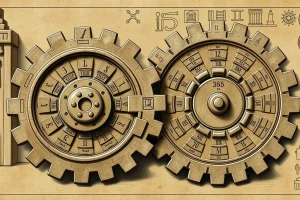
The Long Count calendar operates on a modified vigesimal (base-20) system. While the lower units typically follow a base-20 progression, the transition from the uinal to the tun shifts to base-18 to approximate the solar year. As counts increase beyond the baktun, which represents approximately 394 years, the system reverts to a strict base-20 progression for higher orders. This structure allowed for the expression of vast temporal distances without losing numerical precision.
According to epigraphic analysis and historical mathematical records, the units ascending above the baktun are defined by multiples of twenty. The unit immediately following the baktun is the pictun, consisting of 20 baktuns. Above this lies the calabtun, followed by the kinchiltun, and finally the alautun. Each step represents a twenty-fold increase in duration. This hierarchy enabled the Maya to record mythological creation dates and project astronomical cycles far beyond the scope of human history. The existence of these units contradicts the modern misconception that the Long Count was limited to a single 13-baktun cycle, instead showcasing a sophisticated understanding of deep time.
Evidence & Sources
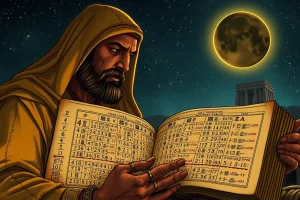
Archaeological and textual evidence supports the existence of these higher units. One of the most significant sources is the work of J. Eric S. Thompson, whose 1950 analysis of Maya hieroglyphic writing compiled calculations extending far into the past and future. Thompson noted that the Maya calculated a date over 500,000,000 years in the past without error, a truly remarkable achievement that necessitated units larger than the baktun.

Physical monuments also attest to these counts. The East side of Stela C at Quirigua displays the mythical creation date written as 13 baktuns, 0 katuns, 0 tuns, 0 winals, and 0 kins. While this specific inscription marks the beginning of the current era, other inscriptions and mathematical tables utilize the higher periods to contextualize this date within a broader cosmological framework. The modified vigesimal tally used in the Long Count identifies a day by counting the number of days passed since a mythical creation date corresponding to August 11, 3114 BCE in the proleptic Gregorian calendar. The use of higher units allowed scribes to anchor this date within an infinite timeline.
Modern digital heritage projects and mathematical analyses, such as those published by plus.maths.org, continue to investigate these features. They highlight that the Maya system was a place value system similar to modern decimals, but with columns representing units, twenties, four-hundreds, and so on. This structural integrity confirms that the higher units were not theoretical abstractions but functional components of their chronological machinery.
Deep Dive Analysis
Units
The hierarchy of time units above the baktun is strictly defined by vigesimal multiplication. Based on archaeological classifications, the sequence is as follows: one pictun equals 20 baktuns (approximately 7,885 years); one calabtun equals 20 pictuns (approximately 157,700 years); one kinchiltun equals 20 calabtuns (approximately 3,154,000 years); and one alautun equals 20 kinchiltuns (approximately 63,080,000 years). These definitions allow for the expression of dates spanning geological epochs.
Calculation
Calculations involving these units rely on the base-20 numeral system. To convert a higher unit into days, one multiplies the unit value by the accumulated days of the preceding unit. For example, since one baktun contains 144,000 days, one pictun contains 2,880,000 days. This mathematical consistency ensured that astronomical cycles, such as the precession of the equinoxes or long-term planetary movements, could be tracked over millennia without cumulative error.
Diagram Description
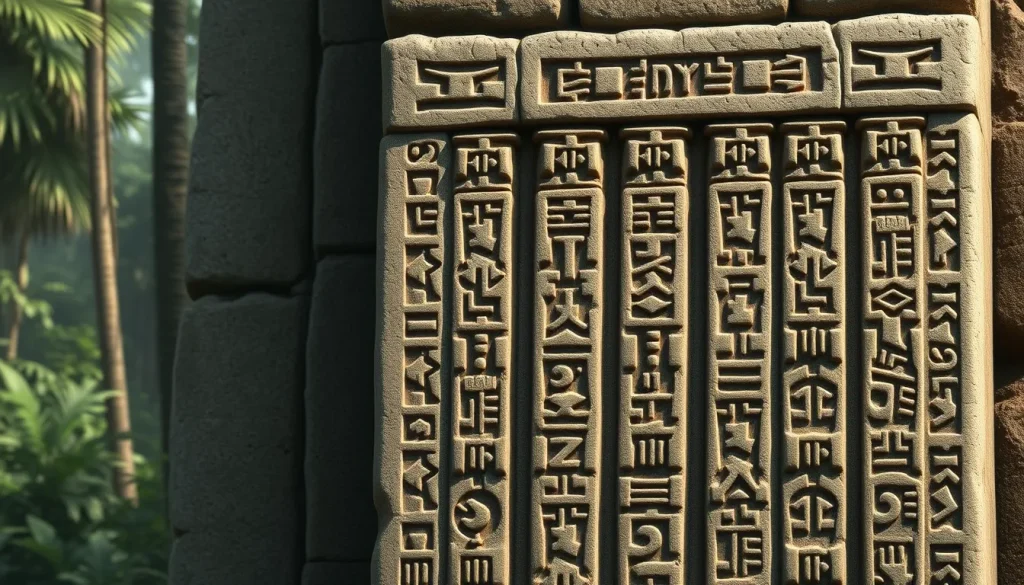
Visually, these units are represented in vertical columns on stelae and codices. The lowest position represents the kin (day), ascending through uinal, tun, katun, and baktun. Above the baktun position, additional columns would be added to the left or above, representing the pictun and higher orders. In glyphic notation, each unit has a specific superfix or main sign indicating its magnitude, allowing scribes to denote vast numbers compactly.
Example Date
A standard contemporary Long Count date might read 13.0.13.16.0, as observed in August 2026. However, a date utilizing higher units might appear in mythological contexts. For instance, a calculation extending 500,000,000 years into the past would require multiple alautuns and kinchiltuns to express the total day count accurately. Thompson’s records indicate such calculations were performed to illustrate how the Maya thought in vast expanses of time.
Relationship to Other Calendars
The Long Count operates independently of the cyclic Haab and Tzolk’in calendars, providing a linear backbone. While the Haab and Tzolk’in repeat every 52 years (Calendar Round), the Long Count with its higher units does not repeat. This linear progression distinguishes it from many other ancient systems that relied solely on cyclic time. The higher units ensure that the linear count remains unique over millions of years.
Historical Use
Historically, these units were used on monuments to legitimize royal lineage by connecting rulers to creation myths. By inscribing dates that reached back into the higher units, kings could assert their place within an eternal cosmic order. The widespread use of the Long Count on monuments across Mesoamerica confirms its importance in political and religious ideology.
Current Traditions
Today, several million Mayan people live in the region, and traditional timekeepers still utilize aspects of the ancient calendars. While the higher units like the alautun are not used in daily agricultural planning, the conceptual framework of deep time remains part of the cultural heritage. Modern Maya daykeepers often integrate the Long Count into ceremonial contexts, acknowledging the continuity of time.
Misconceptions
A common misconception is that the Long Count ended in 2012. In reality, the completion of the 13th baktun was merely the end of a major cycle, similar to an odometer rolling over. The existence of units above the baktun proves that the calendar was designed to continue indefinitely. Another misconception is that these units were purely mystical; archaeological evidence shows they were practical mathematical tools used for precise astronomical calculation.
FAQ
Did the Maya Long Count calendar end in 2012?
No, the completion of the 13th baktun was merely the end of a cycle. The existence of higher units like the pictun proves the calendar was designed to continue indefinitely.
What is a pictun?
A pictun is a unit of time in the Maya Long Count equal to 20 baktuns, or approximately 7,885 years.
How far back could the Maya calculate?
Archaeological evidence indicates the Maya calculated dates over 500,000,000 years into the past using higher order units.
Leave a Reply