
Short Answer
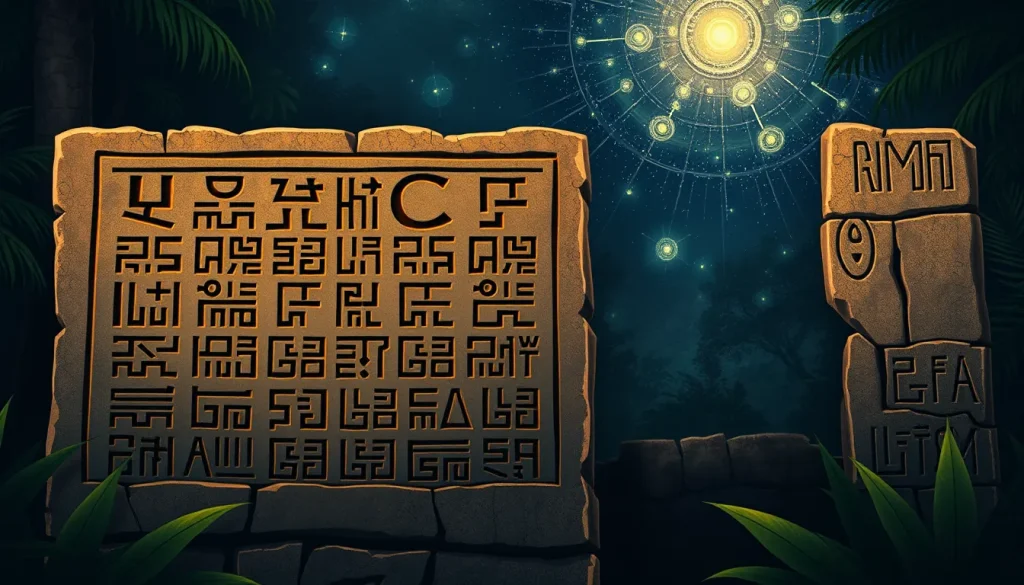
The Nine Lords of the Night represent a fundamental yet often overlooked cyclical component within the complex matrix of Classic Maya calendar systems. While the 260-day Tzolk’in and the 365-day Haab’ receive significant attention in popular discourse, the nine-day cycle of the Lords of the Night provided a critical layer of temporal qualification for ritual activities and cosmological observations. Identified primarily through Glyph G of the Supplementary Series found in Maya inscriptions, these deities governed a sequential progression that operated independently of, yet concurrently with, the primary calendar rounds. Understanding this system requires a synthesis of epigraphic analysis, archaeological context, and an appreciation for the Maya conception of time as a burden carried by specific divine entities.
Main Explanation
The concept of the Nine Lords of the Night is rooted in the Mesoamerican practice of assigning deities to specific units of time. In the Maya system, this cycle consists of nine distinct entities, each presiding over a single night in a repeating sequence. This cycle is mathematically simple, operating on a modulus of nine, but its integration into the Long Count and Calendar Round dates adds significant complexity to date calculations. The Lords are not merely abstract numbers; they are personified forces that influence the quality of the time they govern. This belief system parallels similar structures found in Central Mexican cultures, such as the Aztec Yohualteuctin, suggesting a pan-Mesoamerican tradition of nightly astrology and timekeeping.
Functionally, the Lords of the Night are recorded in the Supplementary Series of Maya inscriptions, a set of glyphs that accompany the primary Initial Series date. The specific glyph associated with this cycle is known as Glyph G. As the days progress, the Lord of the Night changes sequentially. If today is ruled by Lord 1, tomorrow will be ruled by Lord 2, continuing until Lord 9, after which the cycle resets to Lord 1. This progression is uninterrupted, regardless of the fluctuations in the lunar or solar calendars. For the Maya priesthood and scribes, knowing which Lord ruled a specific night was essential for determining the auspiciousness of ceremonies, warfare, or agricultural activities. The system underscores the Maya view that time was not neutral but was imbued with specific spiritual characteristics dictated by the ruling deity.
Evidence & Sources
The identification of the Nine Lords of the Night in Maya epigraphy is a relatively modern achievement in the history of archaeology. In 1929, J. Eric Thompson first demonstrated that Glyph G of the Supplementary Series represented the nine Lords of the Night. This was a groundbreaking realization, as these Lords were previously known primarily through Aztec sources, such as the Codex Borbonicus. Thompson’s work connected the Maya hieroglyphic record with ethnohistorical data from the Postclassic period, bridging a significant chronological gap. However, from the very beginning of this identification, scholars recognized discrepancies. Some Lords of the Night in Maya inscriptions were deemed “incorrect,” meaning they did not agree with the rest of the calendric information calculated from the Initial Series. These “errant” Lords were often attributed to scribal error or errors in the original sculptor’s instructions.

Further research by Sven Gronemeyer in 2006 elaborated on Glyphs G and F, identifying them as aspects of the Maize God in certain contexts, yet maintaining their function within the nine-day cycle. Gronemeyer noted that Thompson associated the nine G-Glyphs with the nine “Lords of the Night” known from the Mixtec Codex Borbonicus. Additionally, contemporary research by Gerardo Aldana explores the connection between Glyph G and the Yohualteuctin, arguing that Central Mexican codices and Classic Maya hieroglyphic records support a radial partitioning of the night sky. This suggests that the Lords of the Night were not just timekeepers but were linked to observational astronomy and the partitioning of nocturnal space. The convergence of these sources—Thompson’s foundational epigraphy, Gronemeyer’s glyphic analysis, and Aldana’s astronomical context—provides a robust framework for understanding this calendar component.
Deep Dive Analysis
Definition
The Nine Lords of the Night are a cycle of nine deities that rule over consecutive nights in a continuous sequence within the Maya calendar system. They are part of the Supplementary Series, a group of glyphs that provide additional calendrical data alongside the main Long Count date. Each Lord is associated with a specific glyph variant (Glyph G) and holds dominion over a 24-hour period, specifically emphasizing the night phase. This system operates on a nine-day modulus, meaning the cycle repeats every nine days regardless of other calendar cycles like the Tzolk’in or Haab’. The Lords are considered “loads” or burdens of time, influencing the spiritual quality of the day they govern.
How it Works
The mechanism of the Nine Lords of the Night is sequential and uninterrupted. To determine the Lord of the Night for any given date, one must calculate the number of days elapsed from a known starting point in the Long Count. The total number of days is divided by nine, and the remainder indicates which Lord is ruling. A remainder of 1 corresponds to the First Lord, 2 to the Second, and so forth, with a remainder of 0 indicating the Ninth Lord. This calculation runs parallel to the 13-day Trecena and the 20-day Veintena of the Tzolk’in. Because 9 and 260 (the length of the Tzolk’in) share no common factors, the combination of the Lord of the Night and the Tzolk’in date creates a larger super-cycle before the exact combination repeats. This mathematical interlocking ensured that no two days were ever exactly alike in the eyes of the Maya.
Key Components
The primary component of this system is Glyph G, which appears in the Supplementary Series of inscriptions. There are nine distinct variants of Glyph G, each representing one of the Lords. These glyphs often include a numerical coefficient or a specific head variant that identifies the particular Lord. Another key component is the Supplementary Series itself, which typically includes information about the lunar cycle (moon age and lunation number) alongside the Lord of the Night. The relationship between the Lunar Series and the Lords of the Night is distinct; Glyph G is outside the Lunar Series proper, though they appear in close proximity within the inscription block. This separation indicates that while both track time, they serve different cosmological functions—one lunar, one nocturnal.
Example
Consider the current date provided in modern calendar conversions: Sunday, 30 August 2026. In the Maya Long Count, this corresponds to 13.0.13.16.0. To find the Lord of the Night, a mathematician would sum the total days represented by this Long Count date. Using the standard correlation (GMT), this date aligns with a specific position in the nine-day cycle. According to available conversion data for this period, the cycle continues its unbroken march. For instance, if a known base date like 13.0.0.0.0 (4 Ahau 8 Cumku) is established as ruling Lord 1, every subsequent day increments the Lord. In the context of the Supplementary Series found on Stelae, a date might read “13 Mol, 12 Ahau” accompanied by Glyph G7, indicating the Seventh Lord of the Night rules this specific occasion. This specific combination would then be used to consult almanacs for ritual suitability.
Historical Evidence
The historical evidence for the Nine Lords of the Night is primarily epigraphic, found on stone monuments such as stelae and altars from the Classic Period (c. 250–900 CE). Thompson’s 1929 analysis was pivotal in recognizing Glyph G as the marker for these Lords. Inscriptions at major sites like Tikal, Copán, and Quiriguá frequently include the Supplementary Series, allowing researchers to verify the nine-day cycle against the Long Count. However, as noted in research reports from the Center for Maya Research, some inscriptions show “errant” Lords that do not match the calculated sequence. These discrepancies are crucial evidence themselves, suggesting that either the mathematical correlation used by modern scholars needs refinement, or that the ancient Maya occasionally adjusted the cycle for ritual purposes, or simply made errors. The presence of these Lords in the Mixtec Codex Borbonicus also provides ethnohistorical evidence that the concept persisted into the Postclassic period among neighboring cultures.
Common Misconceptions
A common misconception is that the Nine Lords of the Night are identical to the nine levels of the Maya underworld (Xibalba). While both involve the number nine, they are distinct cosmological concepts. The Lords of the Night are timekeepers, whereas the underworld levels are spatial realms. Another misconception arises from the “errant” Lords mentioned in archaeological literature. Some modern interpretations suggest these errors prove the Maya calendar was flawed or mystical. In reality, scholarly consensus attributes most discrepancies to scribal error or local variations in calendar correction, rather than a failure of the system itself. Finally, New Age interpretations often assign specific modern astrological meanings to each Lord without archaeological backing. Academic rigor requires distinguishing between the historical function of the Lords as ritual timekeepers and modern spiritual attributions that lack epigraphic support.
FAQ
How are the Nine Lords of the Night different from the Tzolk'in?
The Tzolk'in is a 260-day cycle combining 13 numbers and 20 day names. The Nine Lords of the Night operate on a separate, continuous 9-day cycle that runs parallel to the Tzolk'in, adding another layer of temporal qualification.
Why are some Lords of the Night in inscriptions considered 'errant'?
Some inscriptions show a Lord of the Night that does not match the calculated sequence based on the Long Count. Scholars attribute this to scribal errors, local calendar adjustments, or mistakes by the astronomer-priests instructing the sculptors.
Did the Nine Lords of the Night influence daily life?
Yes, each Lord was believed to impart a specific quality to the night they ruled. This influenced the auspiciousness of rituals, warfare, and agricultural activities, making them crucial for decision-making by the elite and priesthood.
Leave a Reply