
Short Answer
The rapid advancement of digital technologies in archaeology has transformed how researchers document, preserve, and disseminate information about Indigenous Maya heritage sites. Tools such as aerial Light Detection and Ranging (Lidar) and high-resolution 3D modeling allow for the precise mapping of vast landscapes and fragile structures without physical contact. However, this technological leap has precipitated a critical discourse regarding the ethical implications of digitizing sacred spaces, human remains, and cultural landscapes. As of 2026, the archaeological community increasingly recognizes that technical precision must be balanced with ethical responsibility, particularly concerning the rights of Indigenous descendant communities.
The core tension lies in the transition from viewing heritage data as open scientific property to recognizing it as cultural property governed by Indigenous sovereignty. Recent publications highlight that while federal permissions may be secured for scanning projects, few researchers engage directly with the people in the path of their scans or the descendant stakeholders who maintain cultural continuity with these sites. This oversight perpetuates historical patterns of extraction, often described as tied to fast capitalism, where data is collected for academic prestige or commercial use without reciprocal benefit to the source communities.
Main Explanation
Ethical considerations in digitizing Indigenous Maya heritage sites encompass the protocols, permissions, and philosophical frameworks guiding the use of digital surveying technologies. The primary concern is informed consent. Unlike traditional excavation, which requires physical presence and obvious disturbance, digital scanning can occur remotely or appear innocuous, yet it captures sensitive information regarding burial sites, ceremonial spaces, and community landmarks. The ethical framework demands that researchers pause the global rush for data collection to focus on the dilemmas of remotely scanning Indigenous homelands.
Furthermore, the dissemination of digital replicas requires careful curation. For instance, virtual replicas of funerary elements carry specific cultural sensitivities. The creation of web-based collections for 3D bioarchaeological data must address pressing ethical concerns about the treatment of digital replicas of burials and human remains. It is not sufficient to simply store data; the manner in which it is visualized and accessed must respect the cultural context of the deceased and their living descendants. This approach seeks to bridge the gap between theoretical discussions on bioarchaeological ethics and practical applications in digital repositories.

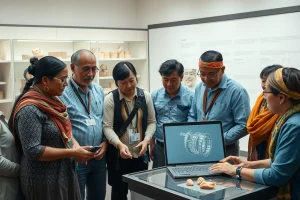
Collaboration is another pillar of ethical digitization. Imagining a Maya archaeology that is truly anthropological requires attuning research to Indigenous cultural heritage issues. This involves scrutinizing the emphasis on the product of field research over the collaborative process of engaging local and descendant communities. Historical archaeology often prioritized settler colonialism narratives that maintained unequal access to heritage. Modern ethical standards demand a shift toward collaborative processes where descendant communities have agency over how their heritage is digitized, stored, and shared.
Evidence & Sources
Recent academic literature provides robust evidence for the necessity of these ethical frameworks. A seminal study published in American Antiquity in April 2025 by Medeia Csoba DeHass, Lori Collins, and colleagues outlines ethical considerations in the use of 3D technologies to preserve and perpetuate Indigenous heritage. This collaborative research, funded by the National Science Foundation, involves authors from institutions such as the University of Missouri, University of Alaska Fairbanks, and Kawerak, highlighting a multi-institutional commitment to ethical standards.
Additionally, Christopher Hernández’s work in American Antiquity (December 2025) specifically addresses the ethics of aerial Lidar mapping. Hernández argues that while Lidar specialists must obtain federal permissions, few engage with people directly in the path of their scans. This research highlights how the growth of aerial lidar is tied to fast capitalism and calls for a temporary pause to address ethical dilemmas. The study underscores that overlooking descendant stakeholders perpetuates inequality in heritage management.
Practical applications of these ethics are visible in projects like och bih – Entró al camino. Published in Studies in Digital Heritage in August 2026, Mirko De Tomassi and Andreas Frech presented this digital collection for the ethical dissemination of 3D models of Palenque’s ancient Maya funerary elements. Hosted on the publicly accessible digital repository of the University Library of the Ludwig-Maximilians-Universität München, this project aims to foster scientific dissemination while addressing ethical concerns about digital replicas of burials. It serves as a model for how data can be shared responsibly.
Patricia A. McAnany’s earlier work in Heritage (2020) laid the groundwork for imagining a Maya archaeology that is anthropological and attuned to Indigenous cultural heritage. This article critically examines the past of archaeology and anthropology, emphasizing the role of settler colonialism in maintaining unequal access. These sources collectively form the evidentiary basis for current best practices in digital heritage management.
Deep Dive Analysis
Module F: Digital Archaeology
Technology Description
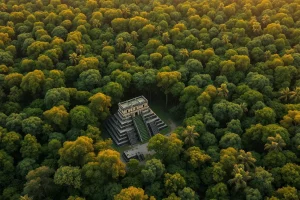
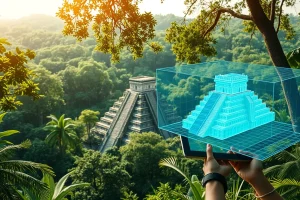
The primary technologies involved in this ethical landscape are aerial Lidar (Light Detection and Ranging) and terrestrial 3D photogrammetry. Lidar uses laser pulses to measure distances to the Earth’s surface, capable of peer beneath forest cover to map vast areas with high precision. 3D photogrammetry involves stitching together overlapping photographs to create detailed three-dimensional models of specific artifacts or structures.
How It Works
Aerial Lidar operates by emitting laser pulses from an aircraft or drone. The sensor measures the time it takes for the light to return, creating a point cloud that represents the terrain and vegetation. Terrestrial 3D scanning uses cameras and lasers to capture the geometry and texture of objects. These data points are processed into meshes and textures that can be viewed virtually.
Field Workflow
Ethical field workflow diverges from traditional extraction models. It begins not with equipment setup, but with community consultation. Researchers must obtain federal permissions and, crucially, engage with people directly in the path of their scans. This involves securing informed consent from descendant stakeholders before any data collection begins. The workflow includes planning meetings with Indigenous groups to determine which areas are sensitive and should not be scanned or published.
Output/Data
The output consists of digital repositories containing point clouds, 3D meshes, and metadata. However, ethical output requires access controls. Sensitive data, such as models of funerary elements from sites like Palenque, may require restricted access or specific cultural protocols before visualization. The och bih collection demonstrates how data can be stored in university libraries with ethical dissemination guidelines.
Example
A key example is the mapping of Indigenous homelands where Lidar scans revealed features unknown to researchers but significant to local communities. Another example is the digitization of Maya funerary elements at Palenque, where 3D models were created but disseminated through an ethically informed web-based collection to respect the sanctity of the remains.
Strengths
Digital technologies offer non-invasive preservation, allowing sites to be recorded without physical contact. They enable global scientific dissemination and collaboration, making data accessible to researchers who cannot travel to the site. High-precision mapping reveals features hidden under vegetation, aiding in protection and management.
Limitations
Technical accuracy does not guarantee ethical accuracy. The proliferation of scans can lead to data overload without context. There is a risk of digital colonialism, where data is extracted and stored in foreign repositories without benefit to the source community. Furthermore, remote scanning can bypass local oversight if not regulated.
Accuracy
Lidar provides high-precision topographical data, often accurate to within centimeters. 3D models provide detailed geometric representations. However, the accuracy of cultural interpretation depends on the involvement of Indigenous knowledge holders. Without their input, the digital record may be geometrically precise but culturally inaccurate.
Cultural Heritage Considerations
The most critical component is the treatment of Indigenous heritage. This includes respecting the sanctity of burial sites and acknowledging that digital replicas carry cultural weight. Researchers must address pressing ethical concerns about the treatment of digital replicas of burials. The goal is to foster scientific collaboration while ensuring that the growth of data collection does not perpetuate unequal access or ignore descendant stakeholders. Ethical digitization requires pausing the rush for data to ensure informed consent and collaborative stewardship are prioritized over extraction.
FAQ
Why is informed consent necessary for aerial Lidar mapping?
Informed consent is necessary because Lidar scans Indigenous homelands and heritage sites remotely. Without engaging descendant stakeholders, this data collection perpetuates unequal access and ignores the cultural significance of the land to local communities.
How are 3D models of Maya burials handled ethically?
Ethical handling involves creating web-based collections with restricted access or specific guidelines, such as the och bih collection for Palenque, to address concerns about the treatment of digital replicas of human remains.
What is the role of descendant communities in digital archaeology?
Descendant communities should be engaged in the collaborative process of field research, having agency over how their heritage is digitized, stored, and shared, rather than being excluded from the product of field research.
Leave a Reply