
Short Answer
The digitization of Indigenous cultural heritage represents a critical intersection between archaeological preservation, digital technology, and human rights. As institutions increasingly move to create 3D models, digital archives, and open-access databases of cultural materials, the ethical implications for Indigenous communities have come to the forefront of archaeological practice. Ethical guidelines for digitizing Indigenous cultural heritage data are not merely procedural checklists but are foundational frameworks designed to address historical power imbalances, misappropriation, and the rights of Indigenous peoples to control their own intellectual property. These guidelines emphasize that data sovereignty is as important as physical sovereignty, ensuring that digital surrogates of sacred or sensitive materials are managed according to community protocols rather than external academic mandates.
Main Explanation
The core of ethical digitization lies in shifting from a model of open access to one of responsible stewardship. Historically, museums and archives have operated under the assumption that once an object is digitized, it belongs to the public domain. However, Indigenous communities argue that digital representations carry the same cultural restrictions and spiritual significance as the physical objects themselves. To manage these concerns, frameworks such as the CARE Principles for Indigenous Data Governance have been established. The CARE Principles stand for Collective benefit, Authority to control, Responsibility, and Ethics. These principles create intellectual space for archaeological research while highlighting the hidden costs and labor associated with data reuse and sharing. They mandate that data must benefit the Indigenous collective, that communities retain authority to control how data is used, that researchers act responsibly, and that ethical standards are maintained throughout the lifecycle of the data.
Furthermore, organizations like Local Contexts have developed practical tools to implement these ethics, specifically through Traditional Knowledge (TK) Labels. These labels, such as TK Attribution, TK Outreach, and TK Non-Commercial, allow communities to attach digital notices to collections that specify conditions for use. This system acknowledges Indigenous Cultural and Intellectual Property (ICIP) rights, which are often not protected under standard state law. For example, in the Finnish context regarding Sámi heritage, ethical guidelines have revealed shortcomings in state law for protecting Indigenous interests, necessitating community-developed protocols to fill the legal gaps. The goal is to ensure that digital access does not equate to unrestricted exploitation, but rather facilitates relationships built on trust and mutual respect between researchers and source communities.
Evidence & Sources
Recent archaeological literature provides robust evidence for the necessity and implementation of these guidelines. A 2025 study published in American Antiquity by Csoba DeHass, Collins, and colleagues examines the ethical considerations in using 3D technologies to preserve Indigenous heritage. The authors, including representatives from Kawerak and the Smithsonian Institution, highlight that 3D surveying and cultural heritage management must involve Indigenous partners from the outset to avoid perpetuating colonial practices. Their research underscores that technological capability does not justify ethical bypass; instead, 3D technologies should be used to perpetuate heritage in ways defined by the community.

Additionally, the application of the CARE Principles in Canadian archaeology, as discussed by Gupta, Martindale, Supernant, and Elvidge in Advances in Archaeological Practice (2023), demonstrates how these frameworks create space for Indigenous decision-making. Their work shows that reuse and sharing of archaeological data are tied directly to ethics in data practice and research design. In the digital age, the conflict between law and ethics is also a significant area of study. Kestilä’s 2025 analysis of the Digital Access to Sámi Heritage Archives project illustrates how ethical guidelines were developed to manage historical power imbalances. This case study reveals that while law may lag behind, ethical guidelines can serve as a protective mechanism for Indigenous views on ethics, ensuring that digitalisation serves the community rather than extractive research interests.
Deep Dive Analysis
Module F: Digital Archaeology and Ethical Workflow
Technology Description
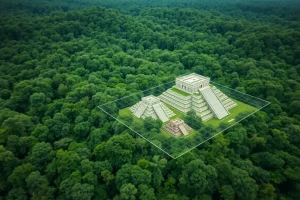
The technologies involved in digitizing Indigenous heritage include photogrammetry, LiDAR (Light Detection and Ranging), 3D laser scanning, and high-resolution archival imaging. These tools create precise digital twins of artifacts, architecture, and landscapes. In the context of Maya archaeology, this might involve scanning stelae, codices, or temple structures. However, the technology itself is neutral; the ethical weight lies in its application and the governance of the resulting data.
How It Works
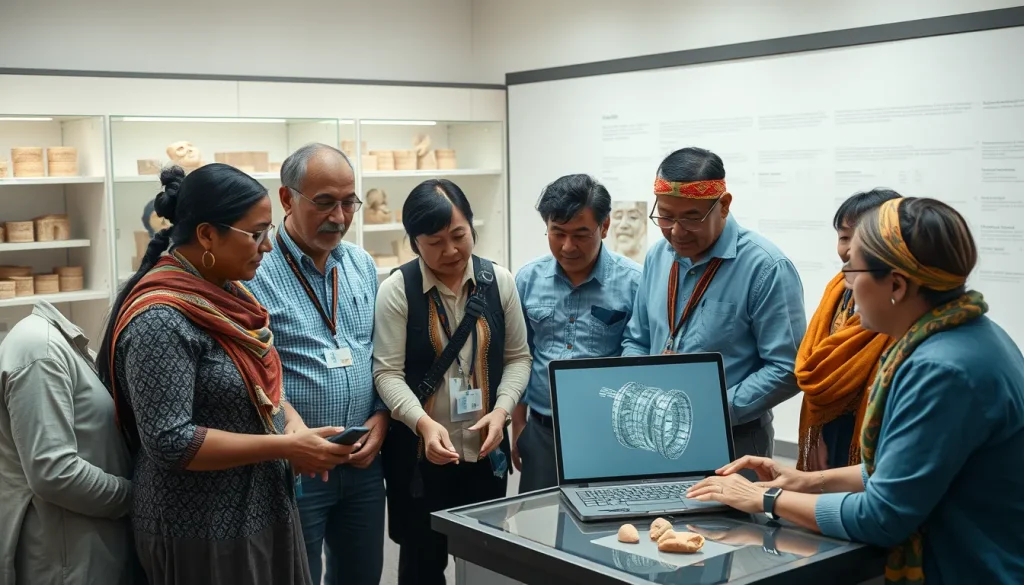
Ethical digitization workflows operate on a collaborative model. Rather than researchers arriving, scanning, and leaving, the process involves prior informed consent and ongoing consultation. The workflow begins with community engagement to determine what can be digitized. Some items may be deemed too sacred for any digital reproduction. Once approved, the data capture occurs, but the storage and access rights are negotiated. The data is not automatically uploaded to public servers but is held in repositories that respect community access protocols.
Field Workflow
The field workflow integrates ethical checkpoints at every stage. Before equipment is deployed, agreements are signed regarding data ownership. During capture, community members may be trained to operate the technology, ensuring capacity building within the community. Post-capture, the raw data is reviewed by community elders or designated cultural officers. This step is crucial for identifying sensitive information that might not be apparent to external archaeologists, such as background details in a photograph that reveal sacred sites.
Output/Data
The output consists of 3D models, point clouds, texture maps, and metadata. Crucially, this data is tagged with metadata standards that reflect ethical constraints. Using systems like Local Contexts, files can carry embedded TK Labels. For instance, a 3D model of a ritual object might carry a TK Non-Commercial label, preventing its use in merchandise, or a TK Attribution label, ensuring the community is credited in any publication. This metadata travels with the data, acting as a digital provenance of ethical consent.
Example
An example of this workflow is seen in the collaboration between the Penobscot Nation and Local Contexts, where digital collections are managed with TK Attribution and Outreach labels. In a Mesoamerican context, a similar approach would apply to digitizing Maya codices or burial goods. If a community determines that images of certain funerary objects should not be viewed by the uninitiated, the digital archive would restrict access accordingly, regardless of the funding body’s open access policies.
Strengths
The primary strength of ethical digitization is the preservation of culture on the community’s terms. It allows for the safeguarding of heritage against physical degradation or loss while maintaining cultural integrity. It also fosters stronger relationships between archaeologists and Indigenous groups, leading to more sustainable research partnerships. Furthermore, it protects communities from misappropriation, ensuring their cultural IP is not exploited for commercial gain without benefit sharing.
Limitations
Limitations include the complexity of managing restricted access databases, which can be technically and financially demanding. There is also the challenge of interoperability; data restricted by TK Labels may not be compatible with standard open-source archaeological repositories. Additionally, enforcing these labels legally can be difficult, as digital files can be copied and stripped of metadata once downloaded, requiring constant vigilance and trust-based relationships rather than purely technical solutions.
Accuracy
Technical accuracy in 3D reconstruction must be balanced with cultural accuracy. A model might be geometrically perfect but culturally misleading if it removes context or presents an object in a way that violates traditional narratives. Ethical guidelines ensure that the accuracy of the data is validated not just by instruments, but by cultural knowledge holders who can verify the interpretation of the digital asset.
Cultural Heritage Considerations
Ultimately, cultural heritage considerations dictate that the digital realm is an extension of the physical world. As noted in the guidance for Indigenous collections, Indigenous Peoples want a practical method to deal with intellectual property issues arising from cultural heritage materials. The digitization process must respect the continuum of life and belief associated with the heritage. For Maya descendants, this means recognizing that ancient data is not just historical record but part of a living tradition. Ethical guidelines ensure that the digital afterlife of cultural heritage honors the living communities who maintain these traditions.
FAQ
Why are open access policies problematic for Indigenous heritage data?
Open access policies often ignore Indigenous Cultural and Intellectual Property rights, potentially exposing sacred or sensitive materials to inappropriate use or commercial exploitation without community consent.
What is the role of Local Contexts in digital archaeology?
Local Contexts provides practical tools like TK Labels that allow Indigenous communities to attach cultural protocols to digital collections, ensuring their views on ethics are respected in digital environments.
How do the CARE Principles differ from FAIR data principles?
While FAIR principles focus on making data Findable, Accessible, Interoperable, and Reusable, CARE Principles prioritize Indigenous rights, emphasizing Collective benefit and Authority to control over unrestricted reuse.


Leave a Reply