Short Answer
The decipherment of Maya hieroglyphic writing stands as one of the greatest intellectual achievements of modern archaeology, unlocking the rich history, cultural knowledge, and societal narratives of an ancient civilization. For decades, this process relied heavily on the manual expertise of epigraphers who painstakingly analyzed glyph blocks, contextual clues, and comparative linguistics. However, the emergence of artificial intelligence (AI) and machine learning (ML) offers a novel lens through which researchers can translate these inscriptions. These technologies hold the potential to allow non-specialists access to reading these texts and to aid in the decipherment of those hieroglyphs which continue to elude comprehensive interpretation. By leveraging large foundation models and computer vision, digital heritage specialists are now able to segment and classify glyphs with unprecedented speed, though human expertise remains essential for validation.
Main Explanation
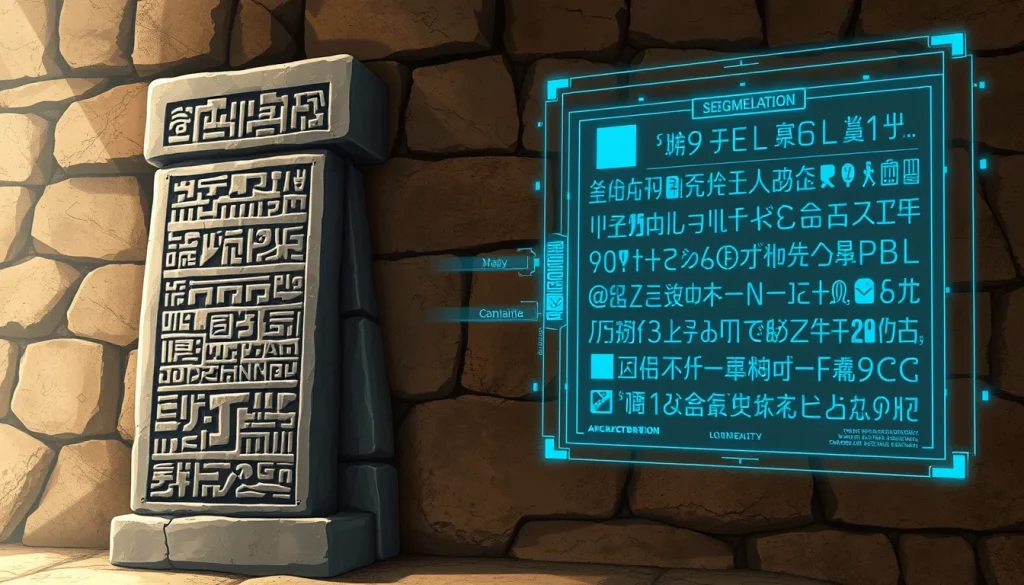
The integration of AI into Maya epigraphy represents a significant shift from traditional manual analysis to computational assistance. The core challenge in digitizing Maya writing lies in the complexity of the script itself. Maya glyphs are logosyllabic, combining logograms (words) and syllabic signs, often arranged in intricate square blocks that can vary significantly in style depending on the medium, whether stone, ceramic, or codex. Early attempts to apply publicly available foundation segmentation models to these artifacts yielded limited effectiveness due to the unique visual characteristics of the glyphs. To address this, recent studies have involved the meticulous curation of image and label pairs with the assistance of experts in Maya art and history. This process enables the fine-tuning of foundation models, significantly enhancing model performance and illustrating the potential of fine-tuning approaches.
A notable breakthrough in this field is the development of specific language models designed for Maya script. In December 2025, researcher Benjamín González showcased a groundbreaking artificial intelligence model called Sáastun at the INAH Yucatán Ichkaantijoo Symposium. The Sáastun AI model, named after a seeing stone used by Maya priests for divination, is capable of converting ancient Maya to English. While González made it clear during the presentation that his work is still an early prototype, the demonstration left attendees impressed by how far the technology has come. The model emphasizes the importance of the segmentation of elements which make up any particular Maya glyph to make sense of its meaning. This underscores a critical workflow in digital epigraphy: before translation can occur, the individual components of the glyph must be accurately identified and isolated from the background noise of erosion or artistic variation.
Furthermore, the application of AI is not limited to translation alone. It extends to the organization and retrieval of digital archives. Projects like MAAYA (Multimedia Methods to Support Maya Epigraphic Analysis) have developed visual analysis methods for segmentation, classification, indexing, and retrieval of Maya glyphs in ancient codices. These methods, based on computer vision and machine learning, are generic and could be applicable to other sources of visual data in the digital humanities. By creating a data repository and enabling the segmentation of glyph strokes, researchers can classify single glyphs and visualize glyph collections more efficiently than ever before. This systematic approach supports the broader goal of documentation and decipherment, ensuring that digital tools serve as robust aids rather than replacements for scholarly interpretation.
Evidence & Sources
The academic foundation for AI-assisted decipherment is built upon a timeline of collaborative research between computer scientists and archaeologists. The MAAYA Project, documented as early as 2014 and expanded in 2017, established the groundwork for integrating epigraphy and computer science. Led by researchers such as Daniel Gática-Pérez and Carlos Pallán Gayol, the project focused on multimedia analysis and access for documentation. Their work summarized the technical aspects of methods developed for preparation of source materials and creation of a data repository. This long-term collaboration between institutions like the Idiap Research Institute, EPFL, and the University of Bonn provides the structural evidence that computational methods are viable for cultural heritage.
More recent evidence comes from the 2024 study titled “Segmentation of Maya Hieroglyphs through Fine-Tuned Foundation Models.” Published in December 2024, this study leveraged a large foundation model to segment Maya hieroglyphs from an open-source digital library dedicated to Maya artifacts. The authors noted that despite the initial promise of publicly available models, their effectiveness was limited until fine-tuned with expert assistance. This publication serves as empirical evidence that human-in-the-loop training is necessary for high accuracy. Additionally, the presentation of Sáastun AI in December 2025 at a major Mayanist conference in Mérida, Mexico, provides contemporary evidence of rapid progress. Archaeologist Zachary Lindsey noted that while there is still obvious work to be done, the progress is nothing short of amazing. These sources collectively validate the current state of AI in epigraphy as a powerful, evolving tool grounded in rigorous data curation.
Deep Dive Analysis
Technology Description
The primary technologies employed in this field are computer vision for image processing and large language models (LLMs) for semantic translation. Computer vision algorithms are tasked with detecting the boundaries of glyph blocks within high-resolution photographs of stelae or codices. Large language models, such as the Sáastun AI, are trained on corpora of already deciphered text to predict meanings based on patterns.
How It Works
The workflow typically begins with image acquisition, where artifacts are photographed under controlled lighting. These images are then fed into a segmentation model. The model identifies the distinct strokes and components that make up a glyph. Once segmented, these components are classified into known glyph values. Finally, the sequence of glyphs is processed by a translation model that attempts to render the text into a modern language like English or Spanish. This process relies heavily on the segmentation of elements which make up any particular Maya glyph to make sense of its meaning.
Field Workflow
In practice, the workflow involves a collaboration between engineers and epigraphers. Experts in Maya art and history assist in the meticulous curation of image and label pairs. This labeled data is used to fine-tune the foundation models. Without this expert input, the AI cannot distinguish between artistic variation and distinct semantic signs. The fine-tuning of these foundation models significantly enhances model performance, illustrating the value of our collaborative approach.
Output and Data
The output of these systems includes segmented image masks, classification labels for individual glyphs, and draft translations. The MAAYA project specifically developed methods for indexing and retrieval, allowing researchers to search for specific glyph variants across a database. This creates a structured data repository that supports further analysis.
Example
A prime example is the Sáastun AI model showcased in 2025. It takes visual input of Maya writing and outputs a text translation. Another example is the MAAYA project’s work on ancient codices, where methods were developed for segmentation of glyph strokes and classification of single glyphs. These examples demonstrate the transition from theoretical computer science to applied archaeology.
Strengths
The primary strength of AI is scalability. Machine learning offers a novel lens through which we can translate these inscriptions, with the potential to allow non-specialists access to reading these texts. It can process vast quantities of data much faster than a human researcher, identifying patterns that might be overlooked in manual analysis.
Limitations
Despite the advancements, limitations remain. González made it clear his work is still an early prototype. Maya writing is famously complex, and context often dictates meaning in ways that current models struggle to capture. The effectiveness in accurately segmenting Maya hieroglyphs was initially limited without expert fine-tuning. AI cannot yet fully replicate the nuanced understanding of historical context that a trained epigrapher possesses.
Accuracy
Accuracy is highly dependent on the quality of the training data. The study involving the meticulous curation of image and label pairs showed that expert assistance enables the fine-tuning of these foundation models. This process significantly enhanced model performance. However, users must remain skeptical, as noted by attendees at the 2025 conference who were initially sceptical about the AI model.
Cultural Heritage Considerations
The use of AI in this context raises important considerations regarding cultural heritage. Tools are designed to aid in the decipherment of those hieroglyphs which continue to elude comprehensive interpretation, not to override indigenous knowledge or historical consensus. The naming of the Sáastun model after a seeing stone used by Maya priests for divination reflects an attempt to honor cultural context, even if the technology is modern. The developed methods are generic and could be applicable to other sources of visual data in the digital humanities, promoting broader access to cultural history.
FAQ
Can AI fully replace human epigraphers in deciphering Maya glyphs?
No. Current models like Sáastun AI are early prototypes. While they assist in segmentation and translation, expert validation from archaeologists and epigraphers remains essential due to the complexity and context of the writing.
What is the main technical hurdle in using AI for Maya script?
The primary challenge is segmentation. Accurately isolating the elements that make up a glyph from the background and erosion is difficult. Public foundation models were initially limited until fine-tuned with expert-curated data.
What is the Sáastun AI model?
Sáastun is a breakthrough language model showcased in 2025 capable of converting ancient Maya to English. It is named after a seeing stone used by Maya priests for divination and was developed by engineer Benjamín González.
How does the MAAYA project contribute to this field?
The MAAYA project developed multimedia methods for segmentation, classification, indexing, and retrieval of Maya glyphs. It established the groundwork for integrating computer science with epigraphy as early as 2014.
Leave a Reply