
Short Answer
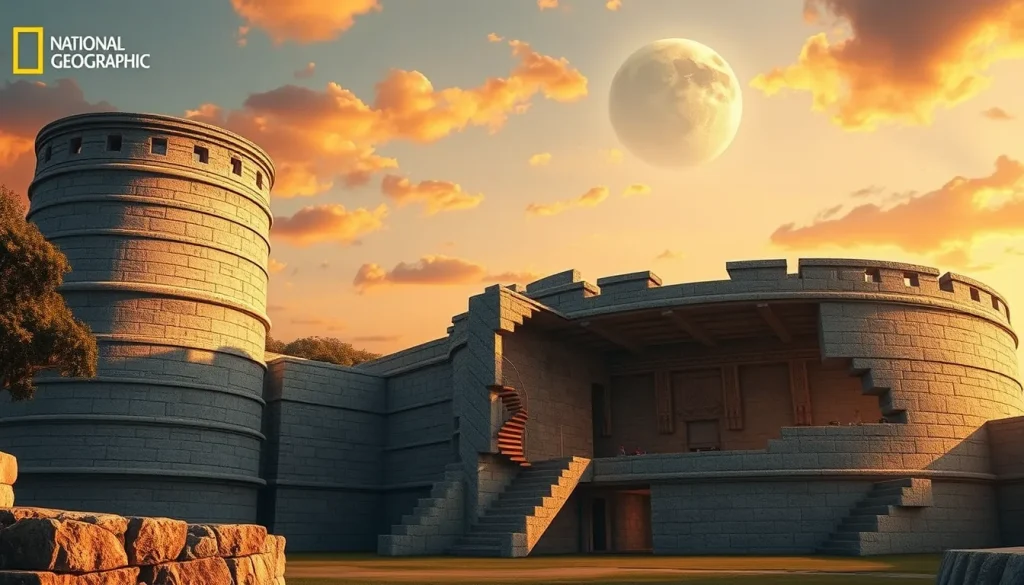
The spiral staircase within El Caracol, located at the ancient Maya city of Chichén Itzá, represents one of the most intriguing intersections of architecture, astronomy, and cosmology in the pre-Columbian Americas. Often referred to as “The Snail” due to its distinctive internal winding structure, this cylindrical tower is not merely a functional access point but a physical manifestation of Maya cosmic order. Unlike the predominantly rectangular architecture typical of Maya civilization, El Caracol’s unique design underscores its specialized role as an observatory and a sacred space where the earthly realm connected with the celestial heavens. The staircase itself facilitates a vertical ascent, mirroring the Maya conception of a layered cosmos where movement between levels held profound ritual significance.
Understanding the symbolism of this staircase requires analyzing the structure within the broader context of Late Classic to Early Postclassic Maya society (circa 800–1000 CE). The staircase allowed priests and astronomers to ascend to the upper viewing platforms, physically enacting the journey through the layers of the universe. This architectural choice was not arbitrary; it was aligned with precise astronomical phenomena, including the movements of Venus and the solar solstices. Consequently, the spiral staircase symbolizes the pathway to knowledge, authority, and the divine, serving as a critical tool for religious, agricultural, and calendrical planning. Modern archaeological analysis continues to reveal how this structure embodied the Maya perception of cosmic order, distinguishing it as a testament to their advanced scientific and spiritual achievements.
Main Explanation
The term “El Caracol” is Spanish for “The Snail,” a name derived directly from the spiral staircase that winds within the cylindrical tower. This feature is exceptionally rare in Maya architecture, which typically favors rectilinear forms such as pyramids and temples with straight staircases. The presence of a spiral staircase indicates a specific functional requirement: the need to reach a high vantage point within a compact, circular footprint. In the context of Maya cosmology, verticality is often associated with the axis mundi, or the center of the world, connecting the underworld (Xibalba), the earthly plane, and the heavens. By ascending the spiral staircase, an individual moves away from the terrestrial ground toward the sky, symbolically traversing the layers of the cosmos.
The symbolism is further reinforced by the structure’s orientation and design. The tower rises from a large square platform, creating a geometric synthesis of the circle (sky/heavens) and the square (earth). The staircase provides access to narrow windows and doorways that are strategically aligned with celestial events. Therefore, the act of climbing the staircase was likely part of a ritual process, preparing the observer to engage with the divine movements of celestial bodies. This integration of form and function suggests that the staircase symbolized more than just physical access; it represented a transition into a sacred state required for astronomical observation and ritual interpretation. The structure stands as a physical expression of sacred space, organizing the heavens and establishing the center as a position of power and authority.
Evidence & Sources
Archaeological evidence supports the interpretation of El Caracol as an astronomical observatory with deep cosmological significance. Construction phases date the structure to between 830–840 CE, culminating in its final form by 890 CE, with continued use into the Early Postclassic period around 1000 CE. The structure features four doorways oriented approximately 10–12 degrees off cardinal directions, and narrow windows aligned for sighting key celestial events. A grand staircase faces 27.5 degrees north of west, designed to facilitate precise tracking of astronomical phenomena. These alignments are not decorative but functional, correlating to the movements of the planet Venus, which was revered by the Maya as a war deity and the sun’s twin.
Academic research into Maya cosmic order highlights how the ritual act of portioning and layering created spatial order used to organize everything from the heavens to the layout of altars. The archaeological record, along with iconographic representations, expresses the Maya perception of a quadripartite division and layered cosmos. El Caracol fits this model by physically manifesting these concepts. The spiral staircase allows for the “layering” of space vertically, while the platform and alignments address the quadripartite division horizontally. Sources indicate that the observatory’s precise alignments with celestial events, including solstices and equinoxes, underscore its role as a critical tool for religious and agricultural planning. This evidence distinguishes historical Maya beliefs from modern interpretations, grounding the symbolism in archaeological data rather than speculative spirituality.
Deep Dive Analysis
Location and Context
El Caracol is situated within the ancient Maya city of Chichén Itzá on the Yucatán Peninsula in modern-day Mexico. Its strategic placement within this sprawling ceremonial center underscores the integration of cosmological knowledge into the political and religious life of the Maya elite. The structure is located in a zone dedicated to astronomical observation and ritual, distinguishing it from residential or purely administrative buildings. Its prominence in the landscape ensured that the movements observed from its heights were linked to the authority of the ruling class.
Construction and History
Constructed in multiple phases, the building began around 830–840 CE and reached its final form by 890 CE. This timeline places it firmly in the Late Classic to Early Postclassic periods. The use of a cylindrical tower rising from a square platform represents a synthesis of indigenous knowledge and potential external influences, distinguishing it from the predominantly rectangular architecture of other Maya structures. The durability of the structure allows modern researchers to study the original alignments, although some degradation has occurred over the centuries.
Architecture and Design
The defining architectural feature is the internal spiral staircase, which inspired the Spanish colonial-era nickname “The Snail.” This design is unique among Maya structures. The tower provides panoramic views of the horizon, essential for astronomical sighting. The structure features narrow windows and specific doorways that function as sightlines. The combination of the circular tower and square base reflects the Maya cosmological model of a round sky over a square earth. The staircase is the mechanism that allows human interaction with this architectural cosmogram.
Astronomical Interpretation
The primary purpose of the structure was to observe and record the movements of Venus and solar positions, including solstice sunrises and sunsets. These observations informed agricultural calendars, religious rituals, and military planning. The spiral staircase enabled observers to reach the specific elevation required to align their sightlines with the horizon markers through the windows. The tracking of Venus was particularly critical, as its cycles were associated with warfare and the timing of royal activities. The staircase, therefore, symbolizes the pathway to this critical knowledge.
Archaeological Evidence
Archaeological evidence includes the physical alignments of the windows and doorways which correlate to celestial events. The orientation of the grand staircase facing 27.5 degrees north of west is one such example. Excavations and surveys have confirmed that the structure was not intended for mass public worship but for specialized observation by the elite. The physical wear on the staircase and platforms suggests frequent use by a select group of individuals trained in astronomy and ritual practice.
Alternative Interpretations
While the observatory function is widely accepted, some debates exist regarding the specific symbolic meaning of the spiral form itself. Some scholars suggest potential influences from other cultures, such as the Toltecs, given the Postclassic dating. However, the core function remains rooted in Maya cosmological models. There is no evidence to support New Age claims that the staircase represents energy vortexes or modern spiritual concepts; the symbolism is strictly tied to ancient astronomical and religious practices.
Scholar Consensus
The scholarly consensus regards El Caracol as one of the most significant examples of Mesoamerican astronomy in practice. The spiral staircase is understood as a functional architectural element that also carries cosmological weight regarding vertical ascent and layered space. It stands as a testament to the Maya’s advanced understanding of the cosmos. Researchers agree that the structure reflects the concepts of quadripartite division and layered cosmos described in broader Maya studies.
Visitor Misconception
A common misconception among visitors is that the staircase was open to the general public for religious worship. In reality, the narrowness of the staircase and the specialized nature of the observations suggest access was restricted to astronomers and priests. Additionally, modern interpretations sometimes attribute mystical properties to the spiral shape unrelated to astronomy. It is crucial to distinguish between the historical function of tracking celestial order and modern esoteric beliefs. The structure remains a focal point for archaeological research and cultural heritage preservation.
FAQ
Why is El Caracol called 'The Snail'?
It is named 'El Caracol' (The Snail) by Spanish colonizers due to its distinctive internal spiral staircase that resembles a snail's shell.
What celestial events were observed from the staircase?
Observers tracked the movements of Venus, solar solstices, and equinoxes through windows aligned from the upper platforms accessed by the staircase.
Was the spiral staircase open to the public?
No, access was likely restricted to astronomers and priests, as the structure was a specialized tool for elite religious and calendrical planning.


Leave a Reply