
Short Answer
The understanding of creation within Maya civilization is not defined by a singular event but rather by a complex framework of cyclical time, divine intervention, and recurrent destruction. Two of the most significant textual sources preserving these beliefs are the Popol Vuh of the K’iche’ Maya and the Chilam Balam books of the Yucatec Maya. These documents offer profound insights into how the ancient Maya conceptualized the origin of the world, the structure of the cosmos, and humanity’s place within it. Unlike linear creation narratives found in other traditions, Maya cosmology posits that the universe is a work in progress, built, found wanting, destroyed, and rebuilt multiple times to correct flaws in previous iterations.
Main Explanation
The Popol Vuh, often translated as the “Book of the Community” or “Book of Counsel,” serves as the primary sacred narrative for the K’iche’ people of Guatemala. It recounts the mythology of creation beginning in a state of primordial void. According to the text, initially, there was only the sky and the sea; nothing else existed. The creator gods, Tepeu and Gucumatz, convened in the water and determined that the earth must rise and life must populate it. The narrative details several failed attempts at creating beings capable of worship and sustenance. The first creations included animals, but they could only squawk and crawl, unable to speak the names of the gods. Subsequent attempts involved beings made of mud, who dissolved, and beings made of wood, who lacked souls and memory. Finally, successful humans were formed from maize dough, representing the agricultural foundation of Maya society.
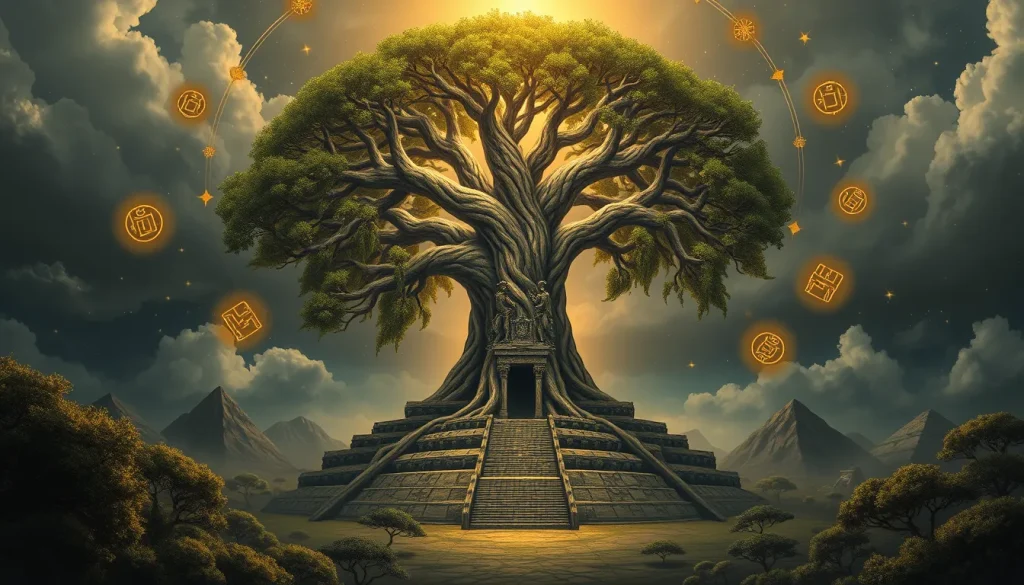
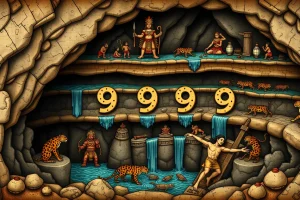
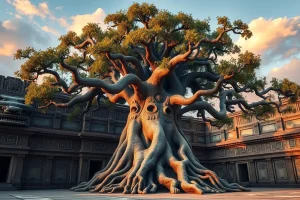
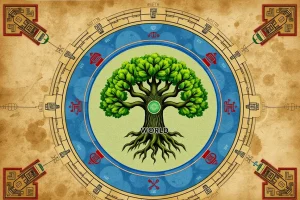
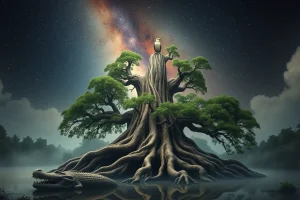
In contrast, the Chilam Balam books, a collection of texts from the Yucatan Peninsula, often intertwine creation mythology with prophetic history and calendrical data. While the Popol Vuh focuses heavily on the mythological narrative of the Hero Twins and the genesis of humanity, the Chilam Balam emphasizes the cyclical nature of time known as the Long Count. These texts reference the current creation era beginning on the date 13.0.0.0.0, corresponding to August 11, 3114 BC in the Gregorian calendar. This date marks the setting of the three hearthstones in the sky, associated with the Orion constellation, which established the cosmic order. The Chilam Balam also describes the cosmos as structured into three primary levels: the Sky with 13 layers, the Earth, and Xibalba (the underworld) with 9 layers, connected by the World Tree or Wakah-Chan.
Both texts underscore the concept that the current world is merely the latest attempt in a series of creations. Each destruction cleared the way for something better, correcting flaws in the previous version. This cyclical worldview implies that the current era will also eventually end, to be followed by a renewal. The Popol Vuh further elaborates on the relationship between gods, humans, and the natural world, establishing a covenant where humans must sustain the gods through ritual and remembrance, while the gods maintain the cosmic order against the forces of decay and darkness represented by Xibalba.

Evidence & Sources
The preservation of these creation narratives is a testament to the resilience of Maya intellectual traditions through the colonial period. The oldest surviving written account of the Popol Vuh dates to approximately 1701, transcribed by the Spanish Dominican friar Francisco Ximénez. He prepared a manuscript with a transcription in K’iche’ and parallel columns with translations into Spanish. However, scholars agree that the narrative itself predates the Spanish conquest, originally preserved through oral tradition until approximately 1550 when it was first recorded in writing using Latin script. This documentation is crucial for modern archaeologists and linguists, as it bridges pre-Columbian beliefs with colonial-era records.
Archaeological evidence supports the textual claims found in these books. Long Count monuments across the Maya region corroborate the creation date of 3114 BC. Inscriptions on stelae and altars frequently reference this zero date as the beginning of the current era. Furthermore, iconography depicting the Three Stones of Creation aligns with the textual description of the cosmic hearth found in the Chilam Balam and Popol Vuh traditions. Digital heritage initiatives have played a significant role in preserving these fragile manuscripts. Institutions such as the BYU ScholarsArchive and the American Historical Association have made digitized versions and translations available, ensuring that the nuanced meanings of the K’iche’ language are not lost to degradation or misinterpretation.
The intersection of archaeology and textual analysis reveals that these stories were not merely myths but functioned as historical and political charters for Maya kingdoms. The lineage of rulers was often traced back to the Hero Twins, Hunahpú and Xbalanqué, whose exploits in defeating the lords of Xibalba are central to the Popol Vuh. This connection legitimized royal authority by linking it directly to the divine creators. Modern digital analysis of the glyphs and text structures continues to refine our understanding of how these narratives varied across different Maya city-states, highlighting both shared cosmological beliefs and regional distinctions in how creation was understood and celebrated.
Deep Dive Analysis
Module A: Definition of Maya Creation Cosmology
Definition: Maya Creation Cosmology refers to the theological and astronomical framework describing the origin, structure, and cyclical renewal of the universe as understood by the Maya civilization. It is characterized by the belief in multiple world ages rather than a single linear creation event.
How it Works: The cosmos operates in cycles of creation and destruction. Time is measured using the Long Count calendar, which tracks days from the start of the current era. When a cycle completes, the world may undergo destruction followed by renewal. The gods manage this process, attempting to create beings capable of sustaining the cosmic order through worship.
Key Components: The system includes the Three Levels of existence (13 Sky layers, Earth, 9 Underworld layers), the World Tree (Wakah-Chan) acting as the cosmic axis, and the Cosmic Hearth (Three Stones in Orion). Humanity is formed from maize, linking biological existence to agricultural cycles.
Example: In the Popol Vuh, the gods destroy the wooden humans with a resinous rain because they lacked souls. This demonstrates the criterion for existence: the ability to remember and honor the creators. The successful maize humans represent the balance required to maintain the current age.
Historical Evidence: Evidence is derived from the Popol Vuh manuscript (c. 1701), the Chilam Balam books, and Long Count monuments dating back to the Preclassic period. Archaeological findings of hearth symbols in temples support the textual descriptions of the creation date.
Common Misconceptions: A prevalent modern misconception is that the end of a calendar cycle implies the end of the world. Maya cosmology suggests renewal rather than final apocalypse. Additionally, the Popol Vuh is sometimes mistakenly viewed as a single uniform bible for all Maya peoples, whereas it is specifically a K’iche’ narrative with regional variations found in other texts like the Chilam Balam.
FAQ
What is the main difference between the Popol Vuh and Chilam Balam?
The Popol Vuh is a K'iche' Maya narrative focused on mythology and the creation of humans, while the Chilam Balam is a collection of Yucatec Maya texts focusing on prophecy, history, and calendrical cycles.
When did the Maya believe the current world was created?
According to the Long Count calendar referenced in these texts, the current creation era began on August 11, 3114 BC.
Why were previous creations destroyed?
Previous creations, such as beings made of mud or wood, were destroyed because they lacked the ability to speak, remember, or worship the gods properly.
Leave a Reply