
Short Answer
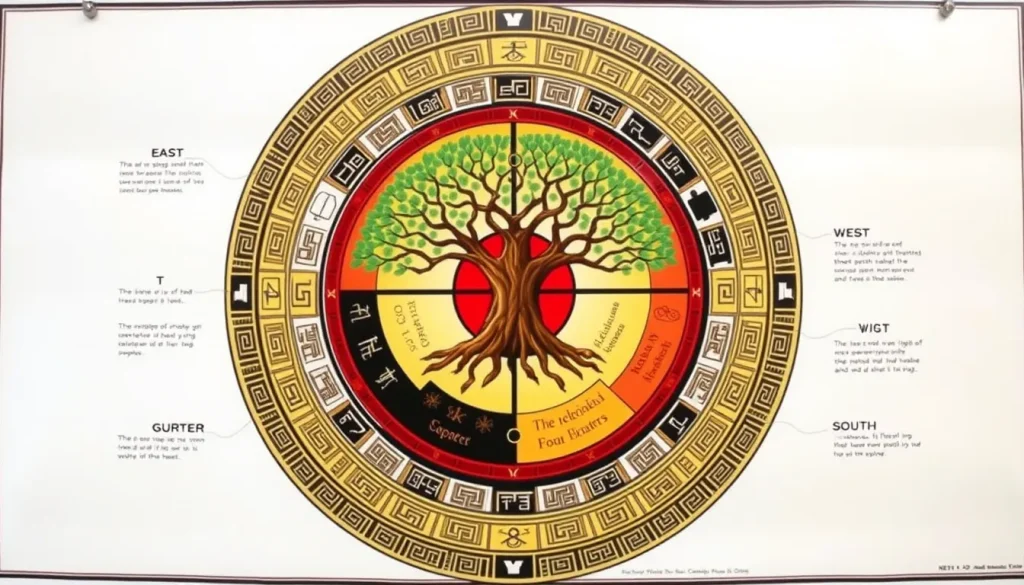
The cosmological framework of the ancient Maya was not merely a map of physical space but a complex integration of direction, color, time, and divine presence. Central to this worldview was the concept of the four cardinal directions, which partitioned the world into sacred quarters. Each direction was assigned a specific color, a set of hieroglyphic signs, and associations with specific years in the calendar cycle. This quadripartite system influenced everything from the orientation of temples to the performance of rituals, ensuring harmony between the human realm and the cosmic order. Understanding these associations provides critical insight into how the Maya navigated their physical environment and interpreted celestial phenomena.
Main Explanation
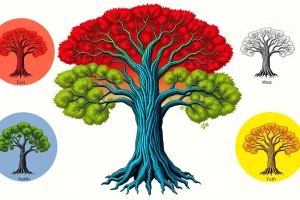
In the Maya worldview, the four cardinal points were not abstract geometric concepts but living entities imbued with spiritual significance. The system is most clearly articulated in Colonial-era sources such as the Book of Chilam Balam and earlier Classic Period codices like the Dresden Codex. According to these texts, the East is associated with the color red, symbolizing the rising sun and the beginning of cycles. The North is linked to white, often representing purity or the zenith. The West is connected to black, signifying the setting sun and the underworld, while the South is associated with yellow, representing the sun at its zenith or the southward path.
These color-direction associations were not static; they interacted dynamically with the Maya calendar. The system governed the rotation of years, where specific year-bearer days were ascribed to each direction. For instance, Kan years were linked to the East, Muluc years to the North, Ix years to the West, and Cauac years to the South. This created a temporal map where time itself moved through the colored quarters of the universe. The linguistic evidence further supports this deep integration. Research into the words used by the Classic, Colonial, and modern Maya reveals consistent terms for directions, such as lik’in or lak’in for East, xaman for North, chik’in for West, and nohol for South among the Yucatec Maya. These terms appear in hieroglyphic inscriptions, bridging the gap between ancient epigraphy and modern linguistic understanding.
The implications of this system extended into the physical landscape. Architecture was often aligned to reflect these cosmological principles. Temples might be painted in the color corresponding to their orientation, or rituals might be performed facing a specific direction to invoke the associated deity or force. This spatial organization was cognitive and mythological, forming the context in which stories were written and illustrated on monuments. The narrative arts of the Maya relied on these conventions to convey meaning, ensuring that the audience understood the cosmic significance of the events depicted.
Evidence & Sources
The primary evidence for the directional-color system comes from a combination of codices, colonial manuscripts, and epigraphic research. The Dresden Codex, a pre-Columbian Maya book of astronomy and ritual, frequently contains glyphs for directions associated with the four colors in the established order. This demonstrates that the system was in place during the Classic Period, prior to European contact. The consistency of these symbols across different pages of the codex suggests a standardized cosmological model used by scribes and priests.
Colonial sources provide further verification. The Book of Chilam Balam of Ixil contains a calendar wheel that explicitly shows the association of year types with cardinal points. Appendix A of the Chilam Balam texts notes that few religious ideas were more widely spread among the aboriginal peoples of America than the sacred character of the four cardinal points. The text explains that the Maya connected this idea with a system of color symbolism, linking red to the east, white to the north, black to the west, and yellow to the south. This textual evidence is crucial because it corroborates the glyphic data with written explanations from the early Colonial period, when Maya scribes were still actively recording their traditions using the Latin alphabet.
Epigraphic research has been instrumental in decoding the hieroglyphs used to represent these directions. While nineteenth-century scholars identified the glyphs, it took considerable time to link them phonetically to the known Maya words for directions. Scholars like David Kelley summarized early decipherment efforts, and modern researchers such as Nicholas A. Hopkins and J. Kathryn Josserand have further clarified the phonetic readings of Classic Period hieroglyphs. Their work confirms that the terms used in the Classic period align with those recorded in the sixteenth century and used by modern Mayas of the Yucatecan branch. This continuity underscores the resilience and stability of this cosmological concept over millennia.
Deep Dive Analysis
Definition
The Maya Cardinal Direction and Color system is a cosmological model that partitions the universe into four quarters, each defined by a cardinal point, a specific color, and associated temporal cycles. It serves as a foundational structure for Maya religion, architecture, and calendar computations.
How it works
The system operates on a rotational logic where space and time are interchangeable. As time progresses through the calendar rounds, it moves through the four directions. Each direction acts as a container for specific energies or deities. The colors act as visual markers for these energies, allowing practitioners to identify the cosmic state of a particular direction at any given time. This is not merely symbolic but functional; rituals were timed and oriented based on these associations to ensure efficacy.
Key components
- East (Red): Associated with the rising sun, Kan years, and the glyph lik’in.
- North (White): Associated with the zenith or cold, Muluc years, and the glyph xaman.
- West (Black): Associated with the setting sun and underworld, Ix years, and the glyph chik’in.
- South (Yellow): Associated with the sun’s southern path, Cauac years, and the glyph nohol.
Example
In the Dresden Codex, glyphs for directions are frequently found associated with those representing the four colors. For example, a ritual scene might depict a deity standing on a glyph representing the East, colored red, indicating that the ritual is invoking the powers of the sunrise or the beginning of a cycle. Similarly, the calendar wheel in the Book of Chilam Balam shows Kan years ascribed to the East, demonstrating how time cycles through this spatial framework.
Historical evidence
Archaeological and textual evidence spans from the Classic Period to the Colonial era. The Dresden Codex provides pre-contact evidence of the color-direction glyphs. The Books of Chilam Balam provide Colonial-era textual confirmation of the color symbolism and year associations. Epigraphic research by Hopkins and Josserand confirms the phonetic reading of direction glyphs matches Colonial and modern Yucatec terms, proving continuity.
Common misconceptions
A common misconception is that this system was uniform across all Maya groups without variation. While the core color-direction scheme (Red-East, White-North, Black-West, Yellow-South) is widely documented in Yucatec sources, variations existed among different Maya branches and time periods. Additionally, modern New Age interpretations often assign spiritual meanings to these colors that are not supported by archaeological evidence. It is crucial to distinguish between historical Maya beliefs recorded in codices and manuscripts versus modern spiritual reinterpretations. The historical system was deeply tied to agriculture, astronomy, and state ritual rather than abstract personal spirituality.
FAQ
What color is associated with the East in Maya cosmology?
Red is associated with the East, symbolizing the rising sun and the beginning of cycles.
How did the Maya link directions to time?
The Maya ascribed specific calendar years (Kan, Muluc, Ix, Cauac) to each of the four cardinal directions, creating a temporal-spatial cycle.
Are the direction terms still used today?
Yes, terms like lik’in (East) and xaman (North) are still used by Mayas of the Yucatecan branch of the Mayan family.


Leave a Reply