
Short Answer
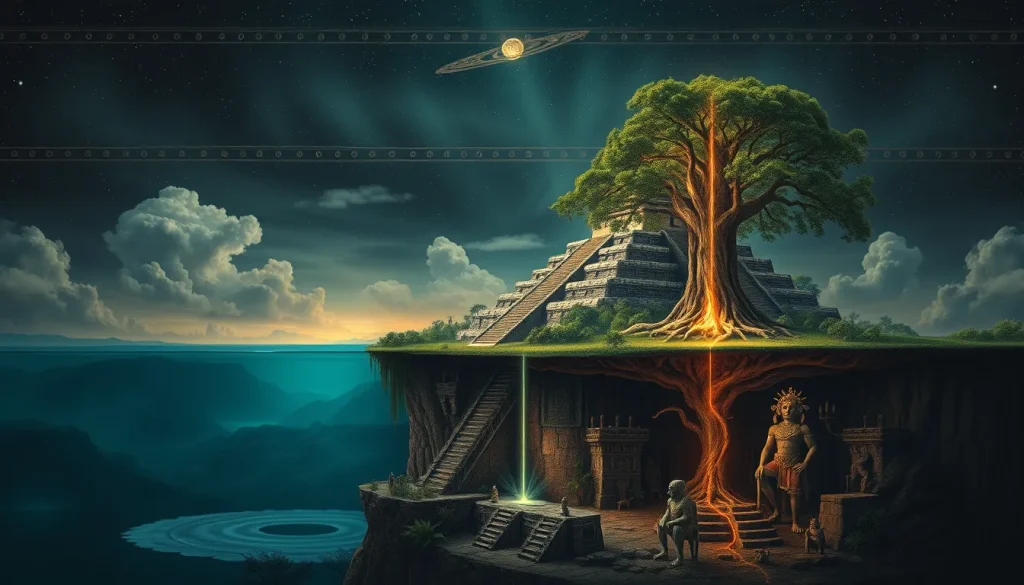
The Maya concept of the universe was not a simple void, but a highly structured, multidimensional architecture known as a cosmogram. This vertical conception of existence integrated the heavens, the earth, and the underworld into a single, interconnected system where divine and human forces constantly interacted. At the heart of this system lay the belief that the universe was divided into distinct layers, each governed by specific deities and accessible only through ritual portals. Central to the lower strata of this cosmos was Xibalba, the Maya underworld, a realm of trial, death, and rebirth that played a critical role in the cycle of existence.
The Structure of the Layered Universe
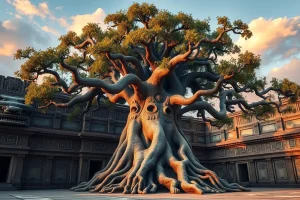
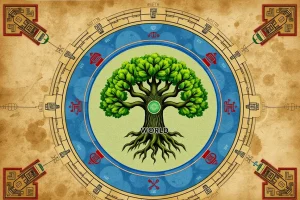
The Maya universe was organized according to a vertical axis, often visualized as a cosmic tree (the Wacah Chan) that anchored the different realms together. This verticality was mirrored by a quadripartite horizontal division, where the world was split into four cardinal directions, each associated with a specific color and deity, with a central axis representing the point of power and authority [3].
The Celestial Realm
The upper portion of the cosmos consisted of multiple layers of heaven. While the exact number of layers varies across different periods and regions, these realms were the abode of celestial deities and the destination of souls who had achieved a certain spiritual status. The sky was viewed as a physical canopy, often depicted in iconography as a celestial monster or a series of banded layers reflecting the movements of the stars and planets.
The Terrestrial Plane
The Earth was perceived as the middle layer, often envisioned as the back of a great turtle or a crocodile floating in a primordial sea. This plane served as the intersection between the divine upper world and the perilous lower world. For the Maya, the Earth was not merely a physical space but a sacred landscape. Certain natural features—such as mountains, islands, and specifically cenotes (collapsed dolines in karst environments)—were viewed as naturally sacred portals that allowed communication between the layers [1].

Xibalba: The Underworld
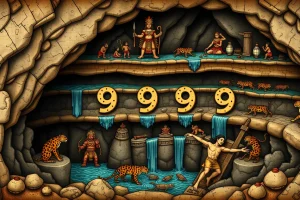
Below the Earth lay the underworld, known in Kʼicheʼ mythology as Xibalba (roughly translated as the “place of fright”) and in Yucatec as Mitnal [4]. Unlike the modern Western concept of hell as a place of punishment, Xibalba was a complex administrative realm ruled by the Maya death deities. It was a place of trial where the deceased, and occasionally living heroes or kings, had to face a series of challenges and traps set by the Lords of Xibalba.
Xibalba was characterized by its subterranean nature, mirrored in the physical world by deep caves and cenotes. These limestone openings were not just geological features but were treated as the literal entrances to the underworld, where blood offerings were made to appease the deities and ensure the continuity of the cosmic cycle [1].
Evidence and Sources
Our understanding of Maya cosmology is derived from a multidisciplinary synthesis of textual, iconographic, and archaeological evidence. Because the Spanish Conquest led to the destruction of countless Maya codices, scholars rely on a few surviving primary sources and the physical record.
Textual Evidence
The primary narratives regarding Xibalba and the layered universe come from the Popol Vuh (the book of the Community), a Kʼicheʼ document that details the creation of the world and the adventures of the Hero Twins in Xibalba. Additionally, the Books of Chilam Balam, a collection of Yucatec manuscripts, provide insights into the cyclical nature of Maya time and its relationship to the cosmic order [1].
Archaeological and Iconographic Evidence
The physical layout of Maya cities often mirrored their cosmology. The use of “sacred space” involved the ritual act of portioning and layering, which organized everything from the arrangement of altars to the orientation of pyramids [3]. Iconography found on ceramic vessels, such as those depicting the court of Xibalba, provides visual confirmation of the underworld’s hierarchy and the aggressive nature of the wayob (spirit companions) and sacrificers [4].
Furthermore, the ubiquity of bloodletting rituals found in archaeological contexts supports the belief in a reciprocal relationship between humans and the gods of the layered universe. Blood was viewed as the essential nutrient required to maintain the balance of the cosmos and facilitate the movement of deities between the layers [1].
Deep Dive Analysis: The Concept of Xibalba
Definition
Xibalba is the subterranean realm of the Maya underworld. It is defined not as a place of moral judgment, but as a place of trial and transition. It is the domain of the Lords of Death, who seek to trick and defeat those who enter their realm.
How it Works
Entrance to Xibalba was achieved through portals in the Earth, most notably caves and cenotes. Once inside, the traveler had to navigate a series of “Houses” or trials—such as the House of Cold, the House of Jaguars, and the House of Bats—designed to test the intelligence and endurance of the visitor. Success in these trials was often linked to the ability to outsmart the Lords of Xibalba, as demonstrated by the Hero Twins in the Popol Vuh.
Key Components
- The Lords of Xibalba: The ruling deities of the underworld who managed the transition of souls and demanded tribute.
- The Portals: Physical openings in the karst landscape (caves/cenotes) that served as liminal spaces between the terrestrial and subterranean worlds.
- The Trials: Ritualized challenges that symbolized the difficulties of death and the necessity of cunning to achieve rebirth.
Example: The Hero Twins
The most famous example of interaction with Xibalba is the story of Hunahpu and Xbalanque. After their father was defeated by the Lords of Xibalba, the twins descended into the underworld. Through a combination of magic and strategy, they overcame the trials and eventually defeated the Lords of Death, ascending to become the Sun and the Moon, thereby establishing the celestial order.
Historical Evidence
Excavations in caves across the Maya lowlands have revealed caches of offerings, including ceramics, jade, and skeletal remains, indicating that these sites were used for ritual communication with the underworld. The alignment of certain structures with subterranean features further suggests a planned integration of Xibalba into the urban fabric of Maya cities.
Common Misconceptions
A common misconception is that Xibalba is equivalent to the Christian Hell. In Maya cosmology, Xibalba was not necessarily a place of eternal torment for the “wicked,” but a necessary stage in the cosmic cycle of death and regeneration. It was a place of danger, yes, but also the source of ancestral wisdom and the prerequisite for the rebirth of the soul.
FAQ
Was Xibalba a place of punishment?
No. Unlike the concept of Hell in Abrahamic religions, Xibalba was a realm of trial and transition. It was governed by the Lords of Death and served as a necessary stage in the cycle of death and rebirth.
How did the Maya access the underworld?
The Maya believed that certain natural features, particularly caves and cenotes (sinkholes), acted as physical and spiritual portals to Xibalba.
Who were the Hero Twins?
Hunahpu and Xbalanque were mythological figures who descended into Xibalba, outsmarted the Lords of Death, and eventually ascended to become the Sun and Moon.
Leave a Reply