
Short Answer
The phrase “Star Wars” often evokes images of space operas and laser swords, but in the context of Mesoamerican archaeology, it refers to a specific and significant hieroglyphic record of Classic Maya warfare. Known academically as the “star war” event, this term describes a type of military conflict recorded in Maya inscriptions that was traditionally believed to be timed according to the movements of the planet Venus. As a Senior Mesoamerican Archaeologist, it is crucial to distinguish between popular culture and the rigorous epigraphic record. The Maya “star war” is a historical phenomenon rooted in the cosmology and political dynamics of the Classic Period (c. 250–900 CE), involving complex interactions between astronomy, mythology, and statecraft.
For decades, the prevailing theory suggested that Maya rulers launched major military campaigns only during specific phases of Venus, believing the planet’s position influenced the outcome of battle. However, contemporary scholarship has begun to reassess this connection, utilizing statistical analysis and historical context to determine the validity of these claims. This article examines the archaeological evidence, the iconography of the star war glyph, and the shifting consensus regarding the role of astronomy in ancient Maya warfare.
Main Explanation
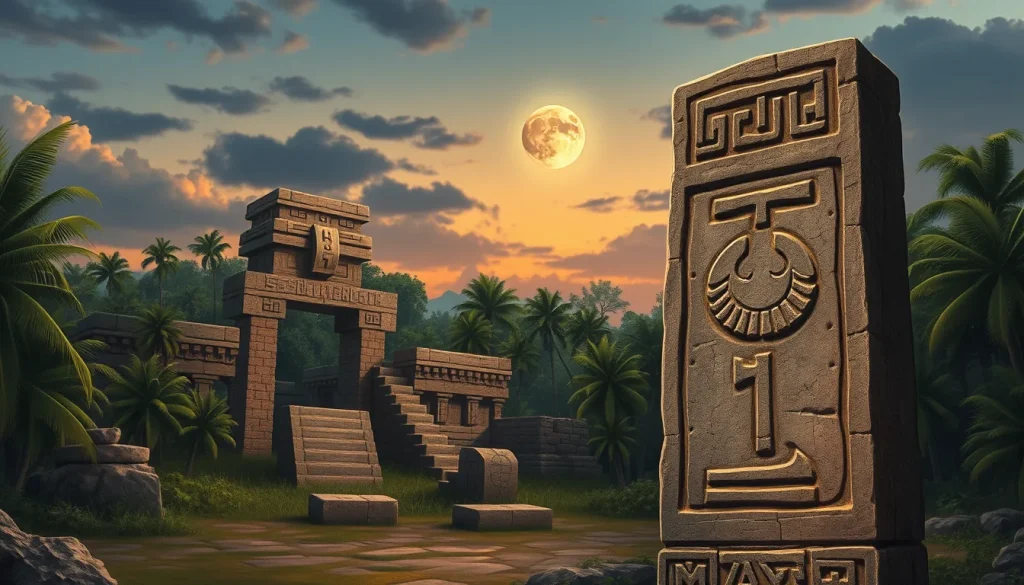
The “star war” is identified in Maya hieroglyphic texts by a specific verb phrase often accompanied by an iconographic glyph depicting a star symbol situated above an element resembling the earth or a shell. This glyph appears in records associated with some of the most significant political upheavals in Maya history, including conflicts between major superpowers like Tikal and Calakmul. The traditional interpretation posits that these were not random skirmishes but ritualized events synchronized with the heliacal rising of Venus as the Morning Star. In Maya cosmology, Venus was associated with warfare and danger, embodied by deities such as Chak Ek’ (the Great Star).
According to earlier models of archaeoastronomy, the Maya observed the 584-day Venus cycle with precision, recording its appearances in codices like the Dresden Codex. The hypothesis emerged that this astronomical knowledge was applied practically to schedule warfare, ensuring divine favor. The “star war” glyph thus served as a marker for these astronomically sanctioned attacks, which often resulted in the capture of rulers, the destruction of monuments, or the installation of puppet regimes. Sites such as Naranjo and Tortuguero feature prominent examples of these glyphs on stelae and hieroglyphic stairways, dating back to the 7th century CE.
However, the definition of the “star war” has evolved. Recent philological considerations suggest the verb may have a different reading than previously assumed, and the iconographic evidence linking it strictly to Venus is considered unstable by some researchers. The event is now understood not merely as a battle but potentially as a mythological reenactment or a specific type of total warfare distinct from smaller-scale conflicts. The distinction is vital for understanding Maya political agency; if rulers were bound strictly by planetary cycles, their autonomy was limited. If the connection is weaker, the “star war” may represent a propaganda tool used to legitimize aggression regardless of astronomical timing.
Evidence & Sources
The primary evidence for the star war comes from epigraphic records carved on stone monuments and painted on ceramic vessels. Source material includes the Naranjo Hieroglyphic Stairway (AD 631) and Tortuguero Monument 6, which display the characteristic star-over-earth glyph. These inscriptions provide dates and names of rulers engaged in these conflicts, allowing archaeologists to cross-reference historical timelines with astronomical retrocalculations. Additionally, the “Star War Vase,” a Late Classic Maya cylinder vase in a private collection, offers iconographic context. Although unprovenienced, analysis suggests it is genuine and provides contact with parallel scenes from archaeologically recovered objects.
Academic scrutiny of this evidence has intensified in the 21st century. A pivotal study by Gerardo Aldana (2005) challenged the statistical treatments used to substantiate the Venus connection. Aldana demonstrated that the iconographic evidence inspiring the association is unstable and that historical contexts of the rulers do not consistently support a belief in ritual timing by Venus phases. This reassessment argues that earlier studies relied too heavily on numerical coincidence rather than historical agency. Furthermore, research by Marc Zender (2020) on the Star War Vase highlights mythological underpinnings, suggesting the verb references an ancient episode relating to the defeat of the Maize God in a disastrous deluge overseen by antagonistic deities like Baluun Yookte’ K’uh.
Thesis work, such as that by Claudia Ann Voit (2012), has also examined the Venus “Shell-Over-Star” hieroglyph specifically, contributing to the nuanced understanding of how this symbol was interpreted in relation to warfare. The convergence of epigraphy, astronomy, and art history provides a multi-faceted view. While the Venus connection remains a popular explanation, the archaeological record increasingly points to a complex interplay of mythology and politics where astronomy was one component among many, rather than the sole determinant of military action.
Deep Dive Analysis
Module E: Myth vs Fact
Claim: Maya “Star Wars” were ritually timed to coincide precisely with the heliacal rising of Venus.
Verdict: Debated and Likely Exaggerated. Current evidence does not fully support strict ritual timing.
Origin of Claim: Early decipherments in the late 20th century linked the star glyph to Venus based on iconographic similarity and statistical correlations between war dates and Venus positions. This view was popularized in broader literature connecting Maya astronomy to daily life.
Evidence: Proponents cite the Dresden Codex Venus tables and specific inscriptions where war dates align with Venus phases. However, Gerardo Aldana (2005) demonstrated that these statistical treatments often rely on simple numerical coincidence. He appealed to the historical contexts of the rulers, showing that as individuals, there is insufficient evidence they held such a belief strictly. Additionally, Marc Zender (2020) notes that contexts of the verb reference a mythological episode regarding the defeat of the Maize God, suggesting a narrative rather than purely astronomical function.
Scholar Consensus: The consensus is shifting away from deterministic astronomical timing. While Venus was undoubtedly associated with warfare symbolically, the idea that military campaigns were halted or launched solely based on its phases is now viewed with skepticism. Scholars emphasize the agency of rulers and the political utility of the glyph over strict astrological determinism. The iconographic evidence linking the verb specifically to Venus is considered unstable.
Remaining Uncertainties: The philological reading of the “star war” verb remains undeciphered in full. While recognized as referencing a specific bellicose event, the exact pronunciation and semantic range are still under investigation. Furthermore, the extent to which mythological narratives (like the Maize God deluge) influenced the timing versus the justification of warfare remains an open question. Future discoveries of dated inscriptions may refine the statistical models used to test the Venus hypothesis.
FAQ
Is the Maya 'Star War' related to the movie franchise?
No, the Maya 'star war' is a hieroglyphic term for ancient warfare recorded centuries before the films existed. The similarity in name is coincidental.
Did Venus definitely determine when Maya wars started?
Not definitely. While traditionally linked, recent studies by scholars like Gerardo Aldana suggest the evidence for strict ritual timing by Venus phases is statistically weak and historically unsupported.
What does the star war glyph look like?
It typically features a star symbol positioned above an element resembling the earth or a shell, often found on stelae and ceramic vessels.



Leave a Reply